
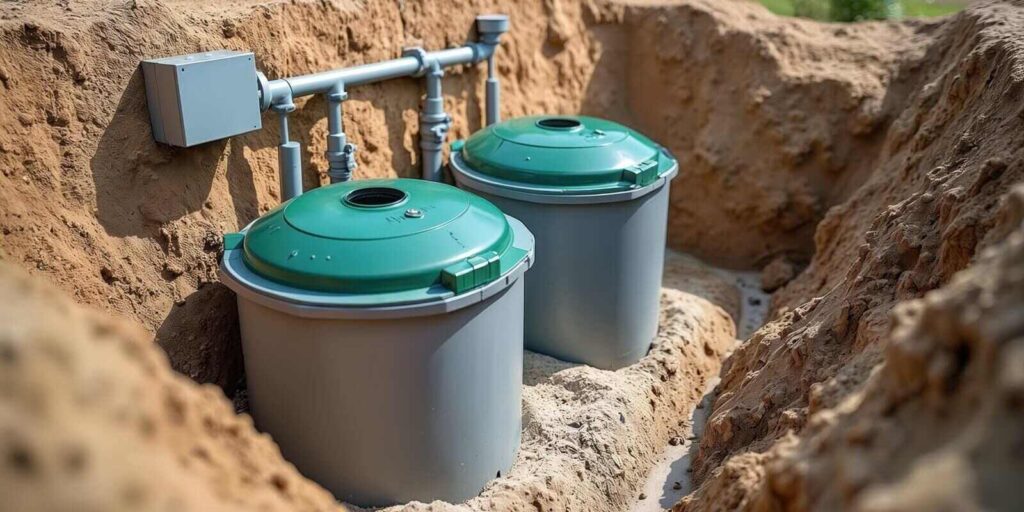
Aug 11, 2025 · 13 min read· Summarize in ChatGPT

You turn on the tap and air spits out before the water runs cloudy. A patch of grass near the drain field stays soggy through a dry week. The kitchen sink gurgles every time the washing machine drains.
Most well and septic failures announce themselves weeks or months before they become emergencies. The early signs are just easy to explain away, and by the time they are impossible to ignore, a repair has usually become a replacement.
This guide covers the warning signs one at a time: what each one usually means and how fast you need to act. If you already know something is wrong, a well inspection or a septic system inspection will identify the cause and what it takes to fix.
Stop and Call If You See Any of These
- Sewage backing up into the house. A health hazard and a hydraulic failure. See sewage backup and slow drains.
- Standing effluent pooling in the yard. Untreated wastewater on the surface can contaminate a nearby well.
- No water from a well that worked yesterday. The pump, pressure switch, or electrical supply has failed.
- A high-water alarm on an advanced septic system. The tank is filling faster than it can discharge.
Everything below is a warning sign rather than an emergency, though several become one if left alone.
Warning Signs Your Well Needs Attention
A private well is a mechanical system running continuously underground, and nearly every failure gives notice first.
Sputtering Faucets and Air in the Lines
What you are seeing: Air spits from the tap before water arrives, often with a knocking sound in the pipes.
What it usually means: In order of likelihood: a drop in static water level so the pump is drawing air, a crack or loose joint in the drop pipe, or a failing check valve letting the water column drain back between cycles.
How urgent: Days to weeks. Running a pump dry, even intermittently, shortens its life quickly.
More on this symptom: why faucets spit air and sputter.
Water Pressure That Drops or Swings
What you are seeing: Weak flow at fixtures, or pressure that surges and fades while a tap is running.
What it usually means: A waterlogged pressure tank is the most common cause and the cheapest fix. Beyond that: a failing pressure switch, scale or iron narrowing the supply line, a clogged well screen, or a genuine drop in the water column.
How urgent: Weeks. Rarely an emergency, but it forces the pump to run longer and shortens its life.
What a technician checks: Tank pre-charge against cut-in pressure, switch contacts, and flow rate at the wellhead versus at the house.
Related: what causes low well water pressure and signs your pressure tank is waterlogged.
Grinding, Humming, or Banging from the Pump
What you are seeing: Noise that was not there before, either at the pressure tank or from the well.
What it usually means: Grinding or rumbling points to worn bearings or impellers. A hum with no water movement means the motor is energized but seized, or the capacitor has failed. A sharp bang at startup is usually water hammer from a failed check valve rather than the pump itself, which is a much smaller repair.
How urgent: Days. Mechanical noise is late-stage wear, and seizure means total loss of water.
More detail: why there is a banging sound when the well pump starts.
The Pump Runs Constantly or Cycles Rapidly
What you are seeing: The pump never shuts off, or it clicks on and off every few seconds. Often the first clue is an unexplained jump in the electric bill.
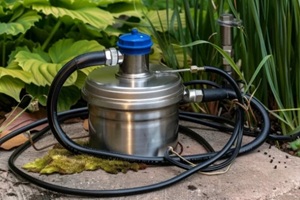
What it usually means: Rapid cycling almost always traces to a waterlogged or failed pressure tank. Continuous running points to a leak in the system, a stuck pressure switch, or a pump that can no longer build enough pressure to reach cut-out.
How urgent: Days to weeks. Short-cycling is one of the fastest ways to destroy a pump motor, and it is entirely preventable.
What a technician checks: Cycle count per minute, tank pre-charge, switch calibration, and a leak test on the supply line.
Related: why your well pump runs constantly.
Sediment, Rust, or Cloudy Water
What you are seeing: Grit at the bottom of a glass, orange staining in fixtures, or water that looks milky and clears from the bottom up.
What it usually means: Sand and grit typically mean a damaged well screen or a pump set too low, drawing from the sediment layer. Orange staining is iron, common in this region. Milky water that clears is dissolved air rather than a contaminant, which points back to the air-in-lines problem above.
How urgent: Weeks, unless the change was sudden. Sediment appearing overnight after heavy rain or nearby construction warrants faster attention, since it can mean surface water is reaching the well.
Related: why well water suddenly has sediment and how the Frederick Valley aquifer affects your well water.
Rotten Egg, Metallic, or Musty Taste and Smell
What you are seeing: A sulfur smell, a metallic edge on the tongue, or an earthy odor strongest on the hot side.
What it usually means: Rotten egg smell is hydrogen sulfide, either from sulfate-reducing bacteria in the water or generated inside the water heater. Whether it appears on the hot side only is what separates the two. A metallic taste is usually iron or manganese. Musty odors can indicate bacterial growth in the well or plumbing.
How urgent: Weeks for taste and odor alone. Immediately if anyone in the household has recurring gastrointestinal symptoms.
What a technician checks: Whether the odor is on both hot and cold lines, then a lab sample for bacteria, sulfates, iron, and manganese through a Maryland Department of the Environment certified lab.
Related: rotten egg smell in water and a simple guide to Maryland well water testing.
Less Obvious Well Warning Signs
- A damaged, loose, or low-sitting well cap. Insects, animals, and surface runoff can enter through a compromised cap. It should sit at least six inches above grade with an intact seal.
- Flooding, heavy rain, or construction within 100 feet of the wellhead. Any of these can push surface contaminants into the aquifer. Nitrate and bacteria levels in particular tend to rise after sustained wet weather, which is worth understanding before the rainy season.
- A breaker that trips during or after storms. Usually moisture reaching a connection or a degrading motor winding, and a diagnosable problem.
- Recurring stomach illness in the household. Frederick County Health Department flags repeated gastrointestinal problems as a reason to test for bacteria and nitrates.
- A well over 20 years old with no inspection on record. Most submersible pumps run 8 to 15 years, so a system past that window without documentation is on borrowed time. Here is how to find out how old your pump is.
If two or more apply, a complete well inspection covers the pump, pressure system, casing, cap, and water quality in one visit rather than chasing each item separately.
Warning Signs Your Septic System Needs Attention
Septic systems fail slowly and then all at once. These are ordered roughly by how far along the failure usually is.
Slow Drains and Gurgling Pipes
What you are seeing: More than one fixture draining slowly, or a gurgle from one fixture when a different one is used.
What it usually means: A single slow drain is a clog. Multiple slow drains plus gurgling means the problem is downstream of the house, which narrows it to a blocked outlet line, a tank needing pumping, or a drain field that can no longer accept flow. Gurgling specifically indicates air being displaced because water cannot move freely.
How urgent: Weeks, but this is the last comfortable warning before backups start.
What a technician checks: Sludge and scum depth, outlet baffle condition, and a camera inspection of the line if the blockage is not in the tank.
Sewage Backing Up Indoors
What you are seeing: Wastewater rising in the lowest drains in the house, usually a basement floor drain or ground-floor shower.
What it usually means: Hydraulic overload or a hard blockage. If the tank has not been pumped in years, solids have likely carried into the outlet line or field. If pumping is current, suspect a collapsed line or a saturated drain field.
How urgent: Immediately. Stop using water in the house and call.
What a technician checks: Tank level first. A full tank with a clear inlet points to a field problem; a low tank points to a blockage between the house and the tank.
A large share of these blockages trace back to items that should never go down the drain.
Soggy Ground or Standing Water Over the Drain Field
What you are seeing: Ground that stays wet or spongy over the field during dry stretches, sometimes with a sheen or odor.
What it usually means: Effluent is surfacing because the field can no longer absorb it. The usual cause is biomat, a dense organic layer that forms at the soil interface and gradually seals it. Compaction from vehicles or a high seasonal water table produces the same result.
How urgent: Days. Surfacing effluent is a health hazard and can contaminate a nearby well.
What a technician checks: Whether the water is effluent or groundwater, tank levels, and drain field permeability.
Related: why a soggy yard may point to your well line or septic system and why drain fields clog.
Bright Green Grass Over the Drain Field
What you are seeing: A strip or patch of unusually lush grass over the field while the rest of the lawn is normal or dry.
What it usually means: Nutrient-rich effluent is reaching the root zone instead of being absorbed and treated deeper in the soil. Same failure as soggy ground, caught earlier. In a dry spell it is often the only visible sign.
How urgent: Weeks. This is the best time to intervene, because the field may still be recoverable.
Related: what a septic drain field is and how to maintain it.
Sewage Odors Inside or Outside
What you are seeing: A sulfur or sewage smell near drains, near the tank, or over the field.
What it usually means: Indoors, the most common causes are a dry P-trap or a blocked vent stack, both minor. If those are ruled out, gases are escaping where they should not. Outdoors, odor over the tank often means a damaged or missing baffle venting gases through the lid; odor over the field points to surfacing effluent.
How urgent: Weeks indoors once traps and vents are ruled out. Days outdoors.
Related: septic tank baffles and how to fix baffle problems.
The Septic Alarm Is Going Off

What you are seeing: An audible alarm or indicator light on an aerobic or pump-assisted system.
What it usually means: The high-water float has triggered, so the tank is filling faster than it discharges. Typical causes are a failed effluent pump, a stuck float, a tripped breaker on the pump circuit, or a field that has stopped accepting flow.
How urgent: Immediately. Silence the alarm if you can, minimize water use, and call. The alarm gives you a limited buffer before overflow.
Related: septic system repairs.
Less Obvious Septic Warning Signs
- No pumping in the last three to five years. Most households need the tank pumped on that cycle. Past that, sludge starts pushing solids toward the outlet, and solids in the drain field are the one failure that cannot be reversed. Tank cleaning and pumping is the cheapest maintenance in the system.
- A system over 25 years old. Drain fields have a finite service life. Past 25 years, plan for repair versus replacement rather than being surprised by it.
- A recent jump in household water use. A running toilet can push hundreds of extra gallons a day into a system sized without it. Hydraulic overload from a plumbing leak is a common and easily missed cause of drain field failure.
Symptom-to-Cause Quick Reference
| Symptom | Most likely cause | How fast to act |
|---|---|---|
| Air spitting from faucets | Low water level or drop pipe leak | Days to weeks |
| Pressure drops or swings | Waterlogged pressure tank | Weeks |
| Grinding or humming at the pump | Worn bearings or seized motor | Days |
| Pump runs constantly | System leak or failed pressure switch | Days to weeks |
| Rapid on-off cycling | Waterlogged pressure tank | Days |
| Sand or grit in the water | Damaged well screen or pump set too low | Weeks |
| Orange staining | Iron in the water | Weeks |
| Rotten egg smell | Hydrogen sulfide or water heater reaction | Weeks |
| Multiple slow drains plus gurgling | Blocked outlet or saturated field | Weeks |
| Sewage backing up indoors | Hydraulic overload or hard blockage | Immediately |
| Soggy ground over the field | Biomat buildup, field not absorbing | Days |
| Bright green grass over the field | Effluent reaching the root zone | Weeks |
| Odor over the tank | Damaged baffle or lid seal | Days |
| High-water alarm | Failed effluent pump or stuck float | Immediately |
When an Inspection Is the Right Call
Four situations justify one: you are seeing two or more signs from the same system, a problem keeps returning after a repair, you are buying or selling, or nothing is wrong and you want to keep it that way. On that last point, both systems benefit from a check every three to five years.
A well inspection covers the pump, pressure system, casing, cap, and water quality. A septic system inspection covers tank condition, sludge and scum levels, baffles, and drain field function.
Frequently Asked Questions
Does a standard home inspection include the septic system? Usually not. Most general home inspections exclude septic tanks, drain fields, and private wells. Both typically require a separate specialist inspection, which is why they are scheduled as add-ons during a purchase.
Do dry wells need to be inspected? Yes. A dry well still has a pump, casing, cap, and electrical supply that can fail or allow contamination, and the cause of the dry condition needs diagnosing. A dropping water table, a failed pump, and a silted-over screen have very different fixes.
How long does a well and septic inspection take? One to three hours for both, depending on whether the tank needs uncovering and whether water samples are drawn. Lab results add several days.
Can I tell a septic problem from a plumbing problem myself? Partly. One affected fixture is almost certainly plumbing. Multiple slow fixtures, or the lowest drains backing up first, means the problem is downstream of the house and involves the tank or field.
Is soggy ground always a septic problem? No. Groundwater, poor grading, and a leaking supply line produce the same symptom. The signs pointing to septic are odor, a location directly over the field, and persistence during dry weather.
How often should a septic tank be pumped? Every three to five years for most households, depending on tank size, household size, and whether a garbage disposal is in use. Pumping on schedule is the most effective thing you can do to extend drain field life.
My water smells like rotten eggs but only on the hot side. Is that the well? Probably not. Hot-side-only sulfur smell usually points to a reaction between the water heater anode rod and sulfate-reducing bacteria. If it is on both hot and cold, the source is more likely the well or plumbing.
Should I test well water even if nothing seems wrong? Yes. Bacteria, nitrates, and several other contaminants are colorless, odorless, and tasteless. Annual testing for bacteria and nitrates is the general recommendation for private wells.
Acting Early Protects Your Water and Your Property
Small problems with a well or septic system rarely stay small. A waterlogged pressure tank left alone becomes a burned-out pump. A tank pumped two years late becomes a drain field replacement. Acting at the first real sign is almost always the cheapest version of the repair.
Tri-County Pump Service has kept water flowing for families and businesses in Maryland, Virginia, and West Virginia since 1991. If you have recognized anything on this page in your own system, we can tell you what is causing it.
Call (301) 882-2690, complete our contact form, or schedule service.