
Jul 22, 2026 · 6 min read· Summarize in ChatGPT

A rain-related breaker trip usually points to a specific electrical weakness in the well system. Explore the most common causes, why repeated resets can make the situation worse, and what a professional inspection can reveal.
Rain shouldn’t leave your home without water. Yet many homeowners with private well pumps notice the same pattern. A storm rolls through, the breaker trips, you reset it, and everything seems fine until the next heavy rain.
The Pattern Is Not a Coincidence
A well pump breaker that trips during or shortly after rain is usually reacting to a real condition in the system. Rain changes the environment around the well. Soil becomes saturated, above-ground components get damp, and weak electrical connections may begin to show problems.
The breaker is doing its job. A tripped breaker can indicate excess current, a short circuit, or a ground fault, depending on the system. OSHA describes a ground fault as a break in the normal grounding path, which can allow electrical current to travel through an unintended route.
When your well pump breaker trips during rain or shortly after a storm passes, repeated resets won’t resolve the root cause. Something is allowing moisture and electricity to interact where they shouldn’t.
Cause 1: Moisture Infiltrating the Control Box or Electrical Connections
Many residential well pumps use a control box that houses electrical components tied to pump operation. Some single-phase submersible motor systems use separate control boxes, which means the box plays a real role in how the pump starts and runs.
A control box is often mounted above ground or in a utility area near the pressure system. Rain-driven dampness can enter through deteriorated seals, a cracked housing, loose fittings, or a lid that no longer sits correctly. Once moisture reaches terminal connections, the system may trip as soon as power meets the fault.
Moisture in the well pump control box components often leaves clues. A technician may find corrosion, discoloration, mineral residue, rusted screws, or damp marks near the terminal block. Homeowners shouldn’t open electrical equipment to investigate, but those signs are common during a professional inspection.
Cause 2: Grounding Issues at the Well Head
Grounding provides a controlled path for stray electrical current back to the panel. A corroded, damaged, loose, or poorly bonded ground connection can make the system much less dependable during wet weather.
Rain can make an existing weakness easier for the system to detect. Damp soil and wet metal can create a path of less resistance for stray current. A well pump ground fault may then trip the breaker or protective device before the pump can keep running.

Older systems across Maryland, Virginia, and West Virginia may be more prone to this kind of issue because wellhead hardware is exposed to years of weather, temperature swings, damp conditions, insects, and corrosion.
Age alone doesn’t prove a grounding problem, but a rain-linked trip is a strong reason to have the connection checked.
Cause 3: Aging or Deteriorating Wiring
Submersible pump wiring has a demanding job to do. Cable may run underground, through conduit, down the well casing, and all the way to the motor.
Rain can expose aging wiring because saturated soil changes the environment around the cable. Cracked insulation, worn jackets, pinched wire, or a failing splice may behave normally in dry conditions, then leak current when the surrounding area becomes damp.
A homeowner can’t diagnose this from the breaker panel. A well pump wiring inspection in MD, VA, and WV may include electrical testing to check insulation resistance and locate hidden faults without guesswork.
Cause 4: Water Entering Through the Well Casing or Conduit
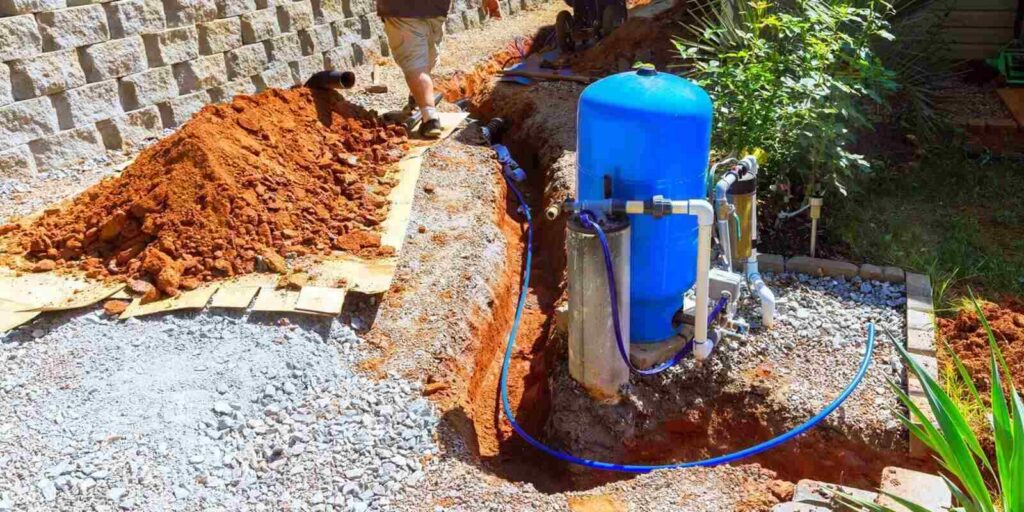
Rainwater can also enter through the wellhead area. The EPA explains that well casing and grout help keep excess water and dirt out of the well, while the well cap protects the top of the casing.
A loose well cap, damaged seal, unsealed conduit entry, or poor grading around the casing can allow stormwater to collect where it shouldn’t. University of Maryland Extension recommends checking that the well cap is in good condition and tightly secured.
Standing water around the wellhead after heavy rain is worth noting, especially when breaker trips occur simultaneously. Surface water near the casing can indicate grading, cap, seal, or conduit issues that warrant closer inspection.
Why Resetting the Breaker and Moving On Is the Wrong Call
Resetting the breaker may bring the pump back temporarily, which makes the habit tempting. The problem is that a reset doesn’t dry a control box, repair damaged insulation, correct grounding, seal a conduit, or fix a failing electrical connection.
Each reset can allow the system to run under the same fault conditions again. Over time, that can contribute to motor strain, wiring damage, control box failure, shock hazards, or fire concerns in the electrical system.
A tripping breaker isn’t a nuisance to work around. CPSC advises homeowners to investigate the cause when a breaker trips, since the problem may involve an overloaded circuit, a malfunctioning product, or a short circuit. The repair begins by determining what the breaker is responding to.
Schedule a Well Pump Electrical Inspection With Tri-County Pumps
A Tri-County Pumps electrical inspection can help identify what’s behind rain-related well pump electrical problems. A technician may review the condition of the control box, terminal connections, grounding path, pressure switch, conduit entry points, well cap, casing area, and wiring insulation where proper testing is required.
For homeowners looking for well pump repair services in Maryland, Virginia, or West Virginia, Tri-County Pump Service, Inc. offers local expertise backed by a family-owned team that has served the region since 1991. Our team works across the entire home water cycle, including well pump systems, water treatment, septic systems, and plumbing, so the inspection looks at the system as a whole.
Now’s the time to schedule service before the next storm repeats the same warning. If your well pump breaker has tripped twice or keeps tripping during rainy weather, contact Tri-County Pumps to schedule an inspection in MD, VA, and WV. Our experienced local team can help identify the issue, explain your options clearly, and Keep It Flowing®.