Jul 13, 2026 · 6 min read· Summarize in ChatGPT
Frederick County well water has a local story written in rock, minerals, and underground pathways. A closer look at the aquifer beneath your home can help explain why your water acts the way it does and why testing your own well is such a smart first step.
Water treatment in Frederick County often starts long before water reaches your tap. Deep beneath many local homes, groundwater moves through limestone and dolomite, cracks, and underground channels that shape its taste, hardness, odor, and potential for staining.
Once you understand the Frederick Valley Aquifer, those spots on the glass, rust-colored stains, and mineral buildup start to make a lot more sense.
The Aquifer Beneath Frederick County and Why It Shapes Your Water
| Did You Know? The Maryland Geological Survey identifies Frederick County as part of Maryland’s karst region. In one documented area, the agency notes roughly 35 square miles of vulnerable karst topography and over 1,000 mapped karst features, including 125 sinkholes. |
Much of Frederick County sits above the Frederick Valley Aquifer, a carbonate rock system made primarily of limestone and dolomite. For many homeowners with private wells, this aquifer serves as the source of household water.
Limestone and dolomite are different from harder rock types such as granite. They slowly dissolve when slightly acidic groundwater moves through them. Over thousands of years, that natural process creates karst terrain, where water travels through fractures, widened cracks, channels, and underground openings.
Those details help explain why Frederick Valley Aquifer water can be so mineral-rich and so different from one property to the next.
What Karst Geology Does to the Water Moving Through It
As groundwater moves through limestone and dolomite, it picks up calcium and magnesium. Those minerals create hardness. The longer water interacts with carbonate rock, the greater the chance it carries a higher mineral load into the well.
Karst geology affecting well water in Maryland can also move through fractures faster than water in some other aquifers. Water doesn’t always pass slowly through a uniform filter of sand or gravel. In a karst system, underground pathways can be uneven, direct, and highly localized.
Nearby land use can also influence the aquifer. Agricultural activity, road treatments, construction disturbance, and natural drainage patterns may all affect groundwater conditions.
The result is a local water profile that can feel unpredictable at the tap, with water that may be hard, sometimes discolored, and occasionally affected by mineral odors.
The Water Quality Issues Most Common in Frederick County Wells
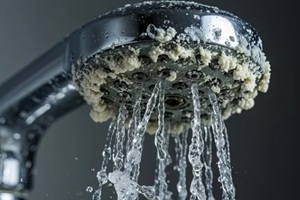
Hardness is one of the most common traits connected to Frederick County, MD, well water quality. Calcium and magnesium are the minerals most responsible for hard water, which leaves scale on fixtures, reduces soap lather, spots dishes, and builds up inside water heaters, dishwashers, washing machines, and plumbing components.
Many homeowners in Frederick County, MD, who are dealing with hard water symptoms notice the effects before they know the cause. A shower door clouds over quickly, faucets develop chalky residue, laundry feels different, and appliance performance slowly drops as mineral scale collects inside the system.
Homeowners in Frederick County may notice iron in well water through rust-colored stains on fixtures, tubs, toilets, sinks, or washed clothing. Iron may also affect taste or leave deposits in water-using fixtures. Hydrogen sulfide, when present, can create a rotten-egg odor that’s particularly difficult to ignore.
Each concern calls for proper testing. A basic in-home water analysis checks hardness, iron and pH. We also have a bacteria indicating analysis that can be made part of the water analysis (this is not a lab test nor a guaranteed result). Some well water issues need paid lab testing to confirm the cause, especially when specific household symptoms point to a more complex concern.
Why Your Neighbor’s Well Water May Be Completely Different From Yours
Homes on the same road can still draw water with very different quality concerns. Karst aquifers don’t behave like one large underground tank filled with identical water.
One well may draw from a fracture that passes through mineral-heavy limestone. At the same time, another well nearby may draw from a different depth, a different channel, or a pathway influenced by different land conditions. A similar location doesn’t always mean similar chemistry.
Regional averages provide only a partial view, as a water treatment system that works well for one Frederick County property may not be suitable for the home next door.
Testing the specific well gives the clearest picture of what the water contains and what type of equipment makes sense.
What the Frederick Valley Aquifer Means for Your Water Treatment Decisions
The mineral-rich nature of carbonate rock makes water treatment a practical step for many Frederick County homeowners on private wells. While a water softener may reduce hardness, it doesn’t tell the full story of what is in the water.
Iron staining, pH imbalance, sediment, odor, and other concerns may require different equipment. Some homes need both filtration and softening. Others need lab testing before a confident recommendation can be made.
Karst aquifers add another reason to test regularly. Since groundwater can move through fractures and openings, private well owners should pay attention to changes in taste, odor, staining, pressure, and appearance.
Homeowners with private wells should follow Frederick County’s groundwater guidance by testing their well water each year.
Local Knowledge of the Aquifer Is the Starting Point for the Right Solution
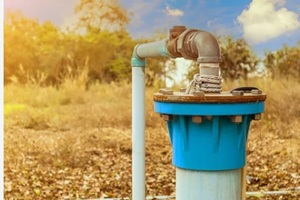
Tri-County Pumps. in Frederick, MD, brings local experience to wells, pumps, and water treatment systems across the region. As a family-owned company serving the area since 1991, we know that a generic approach won’t work for Frederick County wells.
The right plan starts with the water in your home. Hardness, iron, pH, odor concerns, and nearby aquifer conditions all help guide the recommendation. Frederick Valley Aquifer water can vary widely, so the treatment system should match the specific well, chemistry, and your household’s water use.
Contact Tri-County Pump Service, Inc. today to schedule a water test for your Frederick County well. Our water treatment specialists understand this aquifer and can recommend a solution based on what’s actually in your water, rather than a broad regional estimate.