
Oct 6, 2025 · 9 min read· Summarize in ChatGPT

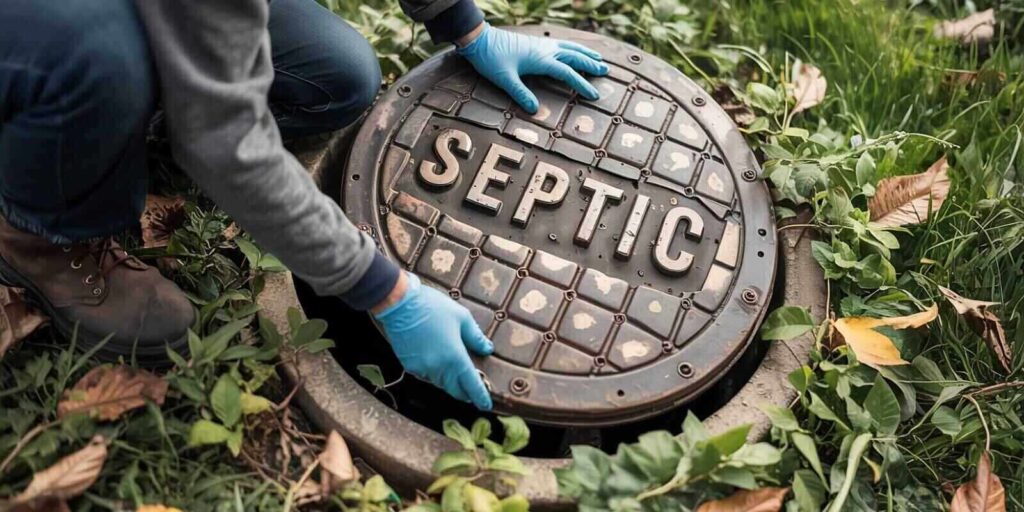
Buying a home with a private well and septic system means inheriting two systems that no municipal utility maintains and no public agency monitors. When they have been cared for, they run quietly for decades. When they have not, the repair bill lands on whoever owns the property on settlement day.
The inspection contingency period is your only real window to find out which situation you are in. It is also short, and several of the tests that matter take days to come back from a lab.
Here is the sequence, in the order it should actually happen.
Start With the Calendar
Timing causes more problems on well and septic purchases than anything technical.
Order inspections and water testing as early in the contingency period as your contract allows. Bacteria and nitrate results typically take several days. Specialized tests such as PFAS, radionuclides, or VOCs take longer, and a certified sampler has to collect them, which means scheduling around someone else’s availability.
If a test comes back failed or a septic inspection turns up a problem, you need time inside the contingency window to get a second opinion, price the repair, and negotiate. Discovering a saturated drain field two days before settlement leaves you with no leverage and no good options.
If the buyer is using a government-backed loan, the lender’s requirements are separate from and usually stricter than the state’s. Confirm those first, since they may dictate the testing scope. We cover the specifics in VA, FHA, and USDA well water testing requirements and the testing timeline for closing.
Step 1: Pull the Records Before You Visit
Start with paper. It costs nothing and it tells you what to look for on site.
For the well, request the Well Completion Report and any associated permits from the seller and the county health department. These document depth, casing, grout, yield, pump information, and construction date. Maryland well records are held through local Approving Authorities and state archives, so even older systems are usually traceable.
For the septic system, ask for as-built drawings, the original permit, percolation test results, and documentation of the approved reserve area. Most Maryland counties require a designated reserve area for future system replacement, and its absence or encroachment is a serious problem you want to find now.
Many county health departments accept records requests through online portals. Check the site for the county the property sits in before calling.
If nobody can locate the tank or field, that is itself a finding. See how to locate a septic tank.
Step 2: Verify Layout and Setbacks
Maryland’s onsite code sets minimum separation distances between a well and a septic system to protect groundwater. The general standard is 100 feet between a drainfield and a private well. The required distance can vary with aquifer type, so an inspector should confirm which applies during the record review and site evaluation.
With records in hand, sketch the property. Mark the well, septic tank, pump chamber if present, distribution box, and drainfield. Add driveways, sheds, pools, and property lines.
That sketch does double duty. It gives you a visual reference for the walkthrough, and a system sketch is a required component of Maryland’s property transfer inspection report.
Step 3: Inspect Well Construction and Performance
The wellhead is the most visible indicator of how the system has been maintained.

Maryland requires a sanitary well cap and a casing that terminates above ground level. Look for a tightly sealed cap, properly secured conduit, and grading that directs surface water away from the well. A damaged cap or a casing at or below grade is a direct contamination pathway.
On performance, ask for a flow test that measures pressure and yield. Counties often apply performance criteria to determine whether a lower-yield well can still serve a household with storage, so a modest yield is not automatically disqualifying. Equipment checks should cover pump age and type, pressure tank size and settings, pressure switch cut-in and cut-out, and any treatment units or bypass plumbing.
For what a full evaluation covers, see what happens in a water well inspection, or book a well inspection directly.
Step 4: Order the Right Water Tests
Maryland’s Be Well Wise program recommends annual testing for existing wells. For a purchase, go further. Sample at both the kitchen cold tap and a raw-water tap ahead of any treatment, so you can tell whether clean results reflect the well or the equipment. Always use a Maryland-certified laboratory.
Core tests for any purchase:
- Total coliform and E. coli, which flag septic influence or surface intrusion
- Nitrate and nitrite, which can indicate septic or agricultural contamination
- pH and total dissolved solids, which affect both water safety and plumbing longevity
Situational tests worth adding:
- Lead and copper, particularly in older homes with legacy plumbing
- Iron and manganese, common locally and responsible for staining and taste complaints
- Radionuclides such as gross alpha, in central and northern Maryland where geology raises the risk
- Radon in water, in Zone 1 counties and granitic terrain
- PFAS, near military facilities, airports, or industrial sites. Frederick County Health Department reports PFAS in county well and surface water, so this is a live local concern rather than a theoretical one
- VOCs, if the property is near former fuel stations or industrial land
We handle sample collection and lab coordination, and our guide to Maryland well water testing explains how to read the results.
Step 5: Hire a Licensed Property Transfer Inspector
This is the step buyers get wrong most often, and it is the one with a hard legal standard behind it.
Maryland requires anyone performing a septic inspection for a property transfer to be licensed for that work. Licensing authority sits with the State Board of On-Site Wastewater Professionals, established under Title 9, Subtitle 11A of the Environment Article, and administered through the Maryland Department of the Environment during the transition. Completing a training course, which was the old standard, is no longer sufficient on its own.
You can and should verify this. MDE publishes a list of Licensed Property Transfer Inspectors. Check your inspector’s name against it before they come out. An inspection performed by an unlicensed individual may not satisfy the requirement, which can cost you the contingency period.
Per MDE’s recognized procedure, a proper inspection has four components:
- A file search with the county
- An interview with the homeowner or occupants
- A physical system inspection and evaluation
- A written report of findings, including a system sketch
Dye testing alone does not satisfy this. If an inspector proposes flushing dye and calling it done, that is not a property transfer inspection.
For a home that has sat vacant or seen light use, add a hydraulic load test. An empty house makes a failing drain field look fine.
During the inspection, expect the professional to check:
- Tank structure, lids, risers, and watertight seals
- Inlet and outlet baffles or tees
- Signs of infiltration or abnormal liquid levels
- Distribution box integrity and flow distribution across trenches
- Evidence of surfacing effluent
- Operation and maintenance records for any BAT nitrogen-reduction unit
Book a septic system inspection, or if you are working through a transaction on a deadline, our well and septic inspections for home sales service is built around settlement timelines.
If Something Fails
A failed test or a flagged system is a negotiating position, not a dead deal. What matters is knowing what the fix actually costs before the contingency expires.
Bacteria is often traceable to a compromised cap or surface intrusion. The sequence is to correct the entry point, shock chlorinate, flush, and retest. Persistent contamination may warrant UV disinfection certified to NSF/ANSI 55 Class A.
Nitrate or nitrite typically points to an ongoing source and needs treatment rather than disinfection, usually point-of-use reverse osmosis or anion exchange.
Lead, metals, radium, uranium, or PFAS each require specific treatment approaches. Match any unit to the relevant NSF/ANSI certification for the contaminant you are treating, and follow county and MDE guidance. For PFAS specifically, see whether home treatment can remove PFAS and our PFAS and PFOS remediation options.
A failing septic system is the expensive scenario, and it is why the timing advice at the top of this page matters. Get a repair or replacement estimate inside the contingency window.
Other Systems Worth Checking Before Closing
Well and septic are the big two, but they are not the only rural-property systems that surprise buyers:
- Cisterns. Different maintenance, different testing, different failure modes. See what to expect when buying a house with a cistern.
- Water heaters. Cheap to check, expensive to replace after settlement. See 5 water heater red flags before closing in Maryland.
- Symptoms during the walkthrough. Run every tap, flush every toilet, and walk the drain field. Our well and septic warning signs guide covers what to look and listen for.
For what is legally required versus merely recommended once you own the property, see Maryland well and septic rules.
Frequently Asked Questions
Who pays for a well and septic inspection in Maryland? It is negotiable and varies by county practice and how the contract is written. In some Maryland counties the seller arranges the septic inspection as a condition of transfer; elsewhere it falls to the buyer as part of due diligence. Confirm with your agent early, because the answer affects who controls the choice of inspector.
How long does a well and septic inspection take? Typically one to three hours on site for both, longer if the tank has to be uncovered or a hydraulic load test is run. Lab results for water quality add several days on top of that.
Does a standard home inspection cover the well and septic? No. General home inspections almost always exclude private wells, septic tanks, and drain fields. These are separate specialist inspections, and the septic portion requires a licensed property transfer inspector.
What if the seller says the system was inspected recently? Ask for the written report and check the inspector’s license. A prior inspection can be useful context, but you are relying on someone the seller selected, and system condition can change quickly. Water quality in particular can shift after heavy rain or any work on the system.
Can I skip the septic inspection if the tank was just pumped? No. Pumping empties the tank; it does not evaluate the drain field, the baffles, the distribution box, or whether the system can handle actual household flow. A freshly pumped tank can also mask a failing field temporarily, which is exactly the wrong time to look.
Buy With the Full Picture
A well and septic system are the two most expensive things on a rural property that no one will inspect unless you ask. Records, the right tests, and a licensed inspector turn them from an unknown into a line item you can plan around or negotiate over.
Tri-County Pump Service has worked with buyers, sellers, agents, and county health departments across Maryland, Virginia, and West Virginia since 1991. If you have a settlement date, tell us the date and we will work backward from it.
Call (301) 882-2690, schedule online, or use our contact form.