
Apr 13, 2026 · 6 min read· Summarize in ChatGPT
| In This Guide: You will learn why these requirements matter, what lenders typically look for, and how to plan ahead so your transaction stays on track. |

Purchasing or selling a property that relies on a private well can introduce an issue many people do not expect: the need for well water testing. With VA, FHA, and USDA financing, lenders often require water quality testing and well inspections, and waiting too long to address them can slow the path to closing.
The testing requirements you may need to meet can vary depending on the type of loan, any lender underwriting overlays that apply, and the applicable health regulations in the local area.
Why Private Wells Trigger Extra Scrutiny During VA, FHA, and USDA Home Loans
Homes connected to public water systems rely on regulated utilities that test and report water quality on an ongoing basis.
Private wells function under a different model because the homeowner, not a utility provider, is responsible for overseeing water quality and system upkeep. Federal law under the Safe Drinking Water Act does not regulate private wells, which is why lenders take a closer look during underwriting.
VA, FHA, and USDA loan programs all apply property standards intended to address basic health and safety conditions. Lenders require documentation demonstrating that the home has a reliable, potable water source.
When a property uses a private well, that documentation often takes the form of well water testing and, in some cases, well water inspections tied to flow rate, distance requirements, and system condition.
Testing isn’t always automatic; however, it can be triggered by loan guidelines, appraiser observations, local health department standards, or lender overlays. That uncertainty is precisely why buyers and sellers should clarify expectations early in the contract period.
How VA, FHA, and USDA Requirements Compare in Real Estate Transactions
Each loan program relies on local or EPA-based drinking water standards, yet how testing is triggered and documented can vary.
VA Loan Considerations
Under current VA standards, an impartial third party must take custody of the water samples and deliver them for testing. The borrower, seller, or real estate agent cannot collect the sample.
As a family-owned company serving the region since 1991, Tri-County Pump Service, Inc. regularly works with buyers, sellers, real estate agents, and lenders to coordinate certified well water testing and address underwriting conditions.
Once certified by the local health authority, the results are generally considered valid for the next 90 days. If closing stretches beyond that window, a retest may be required.
Existing standards follow a clear ladder: local authority first, then state, then EPA if neither exists. That hierarchy affects what parameters must pass.
FHA Loan Triggers That Surprise Buyers and Sellers
The FHA doesn’t require well water testing in every transaction; however, its particular trigger language is quite broad.
Testing may be required for new construction, known unsafe water, proximity to landfills or agricultural activity, a well-to-septic distance of less than 100 feet, or when the appraiser notes a potential concern.

HUD also outlines separation distances for wells, including 50 feet from septic tanks and 100 feet from drain fields, unless local authorities approve otherwise. Flow rate expectations may apply, especially in new construction scenarios.
What begins as a basic water test can expand into a more thorough well water inspection once all of those details come into play.
USDA Timing and Rural Property Details
The USDA requires that a local health authority or a state-certified lab test your water. For closing purposes, the report must still fall within a 180-day window from its issue date.
Shared wells require recorded agreements outlining maintenance and access, and there are limits on how many living units can share the system unless locally approved.
Treatment systems can be acceptable under USDA guidelines if they meet state health authority requirements, and any documentation must show the treated water meets applicable standards.
What Lenders Are Actually Testing for in Most Mortgage Well Panels
When lenders refer to a well meeting local or EPA standards, they’re typically talking about potability. In many real estate transactions, the lab panel focuses on a short list of common health-related contaminants.
Coliform Bacteria and E. Coli
The presence of coliforms can indicate that contamination from surface water or waste sources may have entered the system. A positive result often requires shock chlorination, system evaluation, and retesting before underwriting will clear the condition.
Nitrate and Nitrite
Nitrate and nitrite are commonly associated with fertilizer runoff, septic issues, and agricultural areas. For public water systems, EPA maximum contaminant levels are set at 10 mg/L for nitrate measured as nitrogen and 1 mg/L for nitrite measured as nitrogen. Many lenders mirror those benchmarks when local standards don’t specify otherwise.
Lead and Corrosion Concerns
Lead issues often stem from plumbing components and corrosion. Some lenders require first-draw sampling methods, and underwriters may request documentation describing where and how the sample was collected, especially if the results are elevated.
Turbidity and Other Regional Concerns
Turbidity measures water clarity; high turbidity can indicate sediment intrusion or well-integrity problems and may interfere with disinfection. Certain Maryland counties include turbidity in their minimum testing for certificates of potability.
Local health departments may recommend additional parameters based on groundwater conditions. That’s why confirming the exact panel with the lender matters before scheduling well water testing.
Stay Ahead of Loan Requirements and Keep Your Closing Timeline Moving
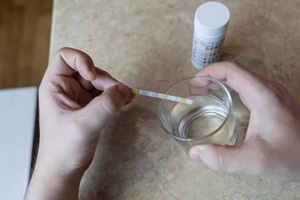
What starts as a routine part of the transaction can turn into a closing issue quickly if expectations for well water testing aren’t confirmed well in advance.
VA, FHA, and USDA loans each carry specific standards, timing rules, and documentation requirements. Getting clear answers up front helps you plan for sampling, possible treatment, and any follow-up well water inspections without added stress.
Since 1991, Tri-County Pump Service, Inc. has provided exceptional service throughout Maryland, Virginia, and West Virginia. We coordinate certified sampling, interpret results in plain language, and address water treatment, well systems, septic, and plumbing concerns in one place.
To get started, you can book your service online, call (301) 882-2698, or submit a request through our online contact form.