Apr 20, 2026 · 7 min read· Summarize in ChatGPT
| In This Guide: You will learn how to tell the difference between fixture issues and whole-home pressure concerns, along with when a booster pump may be the right solution. |
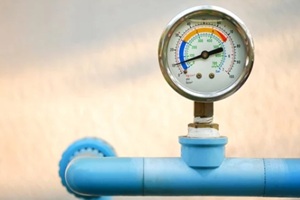
Struggling with low water pressure on city water? A weak shower or slow-filling sink can disrupt your routine and raise questions about what’s really happening behind the walls.
The cause isn’t always the city supply; sometimes it’s a single fixture, a valve, aging plumbing, or a pressure regulator inside the home.
Start With One Simple Question: Is It One Fixture, One Section, or the Whole House?
Homeowners often describe every weak stream as low water pressure from the city water supply, yet the first step is to identify where it occurs.
If one faucet is struggling while others feel normal, the cause usually sits right at that fixture. When the washing machine runs, an upstairs bathroom may lose strength, indicating a potential issue with branch piping or overall system pressure.
If the entire home feels weak at once, it’s time to think about valves, regulators, leaks, or supply conditions.
City utilities consistently guide residents through this same thought process. Although pressure affects flow, the two describe different parts of how water moves through a system.
A faucet can feel weak because debris is blocking the outlet, even if the pressure entering the home is within the typical range of 40 to 80 PSI, with the ideal range being 40 to 60 PSI. Recognizing the pattern removes trial-and-error from diagnosis and prevents you from swapping out components that were never causing the issue.
When the Problem Is Limited to One Faucet or Shower, Look for Local Restrictions First
If low pressure affects only one sink or shower, the highest-probability cause is a restriction at that fixture.
Clogged Aerators and Showerheads
Mineral buildup and sediment collect inside faucet aerators and showerheads over time. That buildup reduces flow, making it seem as if the pressure has dropped.
Removing and inspecting the screen or showerhead is often the first logical step. If other fixtures still perform normally, the issue likely isn’t the city supply.
Partially Closed Stop Valves
Under-sink valves can be accidentally left partially closed after a repair, and a toilet supply valve that’s not fully open can also restrict flow. Small adjustments here can restore normal performance without touching the rest of the plumbing system.
Cartridge or Fixture Wear
Faucet cartridges and internal components wear out or clog, and in those cases, water struggles to pass through the fixture body. Replacing a cartridge may resolve the issue without further intervention.
These fixture-level causes are common and relatively straightforward. They’re also the reason a whole-home solution, such as a booster pump, should never be the first assumption.
When Sections of the House Lose Pressure, Aging Plumbing and Valves Often Play a Role
Pressure problems that affect one branch, such as an addition or an upstairs bathroom group, usually point to something beyond a single aerator.
Aging galvanized steel pipes often begin to corrode from the inside over time, and as corrosion accumulates, the opening in the pipe narrows. Water still flows, but it meets resistance along the way.
When multiple fixtures are in use at once, the effect of that resistance tends to stand out much more. Homes with decades-old piping often experience gradual changes rather than sudden failure.
Undersized branch lines can produce similar symptoms. If supply lines feeding a section of the house are too small, they can’t maintain a strong flow during simultaneous use.
Showers weaken when someone runs a faucet, tubs fill up slowly, and appliances compete for available volume.

Main shutoff valves can also be partially closed without the homeowner realizing it. Even a slightly restricted valve at the entry point reduces usable pressure throughout connected branches.
If the home uses water treatment equipment, the filtration setup should be included among the possible sources being evaluated. Cartridge filters and softeners protect plumbing and fixtures, yet they can become restriction points if not maintained according to manufacturer guidelines.
Whole-Home Pressure Loss Often Points to Regulators, Leaks, or Supply Conditions
If the entire house is showing low water pressure, the next step is to trace the problem upstream, where the broader supply issue is more likely to be found.
Pressure-Reducing Valve Concerns
Many city-water homes have a pressure-reducing valve, or PRV, installed after the meter. Municipal pressure can exceed 80 psi in some areas, and building codes require reduction before water enters the home’s plumbing system.
A failing PRV can create unstable pressure or a steady drop throughout the house. Homeowners often assume the city is responsible, yet the regulator inside the plumbing system may be limiting performance.
Hidden Leaks That Quietly Steal Pressure
Leaks don’t always announce themselves with visible water and may appear as a running toilet, unexplained usage, or the sound of water moving when nothing is turned on. Even small leaks can waste nearly 10,000 gallons per year in an average household.
When water escapes somewhere in the system, the available pressure at the fixtures drops. Comparing meter readings during a no-use period can uncover subtle movement that often signals a hidden leak.
Service Line, Meter, and Municipal Factors
Mineral buildup inside a service line or obstruction at the meter can reduce the system’s available pressure. Temporary neighborhood work, hydrant flushing, or a main break can also affect performance across multiple homes.
Pressure may also vary based on elevation and pressure zones. Properties uphill from storage tanks often experience weaker pressure than those situated farther downhill, and a neighbor’s experience may differ even on the same street.
Common Whole-Home Causes at a Glance
| Possible Cause | What Homeowners Notice |
| Failing PRV | Sudden or fluctuating pressure throughout the house |
| Hidden Leak | Pressure loss plus unexplained water use |
| Clogged Filter | Gradual pressure drop at all fixtures |
| Service Line Buildup | Weak flow even when only one fixture runs |
| Municipal Work | Sudden drop affecting neighbors too |
Measuring pressure with a simple gauge at a hose bib can provide real-time insight. Readings significantly below typical residential ranges help confirm that the issue is not limited to a single fixture.
| Need a Professional Diagnosis? If pressure problems extend beyond a single faucet, our team at Tri-County Pump Service evaluates the entire water system, from valves and PRVs to service lines and water treatment equipment. With over 30 years of experience serving Maryland, Virginia, and West Virginia, we focus on identifying the real cause before recommending repairs or upgrades. |
When a Booster Pump Makes Sense (and When It Does Not)
A booster pump can help when the incoming municipal supply is present yet insufficient to deliver comfortable performance throughout the home. Showers that weaken when another tap opens, upper floors that struggle, or homes located in lower-pressure zones are common scenarios.
Residential booster pumps are designed to increase pressure from city mains water, supplementing the existing supply rather than replacing it. If the source water is reliable but underpowered for your household’s demand, boosting may restore steady performance.
A booster pump is not the right solution for clogged aerators, aging, corroded pipes, failing regulators, or undersized branch lines.
Adding pressure to a restricted pipe won’t remove any internal buildup, and plumbing regulations also prohibit installing a pump as a workaround for undersized piping.
A booster pump can be used on both well and city water supplies. However, for homes on private wells, constant-pressure systems serve a different purpose, adjusting pump speed to maintain steadier pressure as demand changes. In city-water homes, a booster pump is the typical upgrade when supply strength itself is the limiting factor.
Get Clear Answers and Restore Steady Pressure With a Team You Can Trust
Low water pressure in city water usually stems from a handful of common causes; the difference lies in identifying where the restriction begins. Once you know if it’s a fixture, plumbing component, regulator, water treatment system, or supply issue, the right solution becomes clear.
Homeowners across Maryland, Virginia, and West Virginia have turned to Tri-County Pump Service, Inc. for trusted help since 1991. You can begin by booking online, calling (301) 882-2698, or submitting a request through our contact form.