Sep 3, 2026 · 5 min read· Summarize in ChatGPT
Many homeowners with a private well are unsure of exactly what’s coming out of their tap. This can be true for new homeowners and for people who’ve lived on the same well for years but don’t regularly have their water tested. Hearing a neighbor mention an odd test result, or a home inspector use the word “arsenic” almost in passing, can be cause for concern.
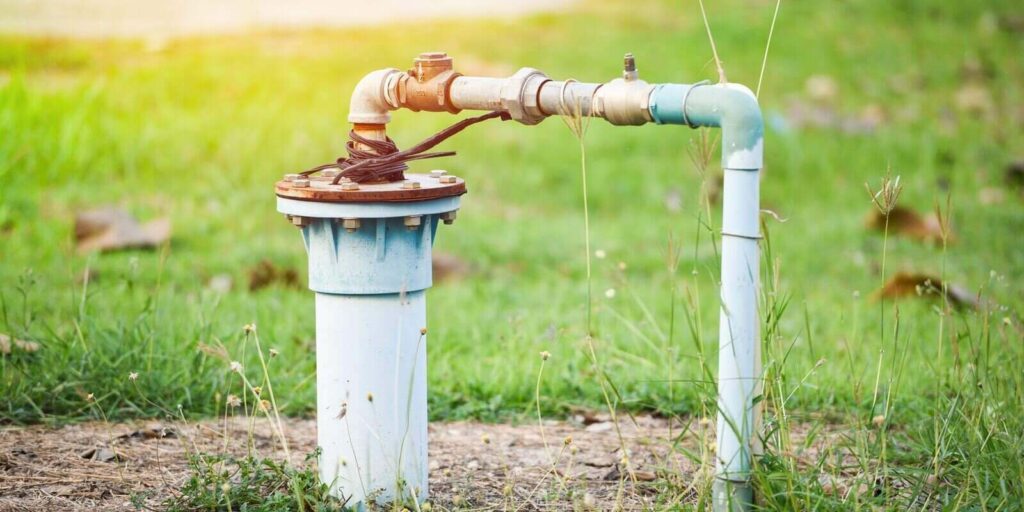
Private well water in Maryland, Virginia, and West Virginia doesn’t pass through a treatment plant before it reaches your tap. It comes straight from the aquifer beneath your property, shaped by the rock, soil, and land use around that specific well. Knowing what’s actually happening below your yard is the starting point for deciding whether testing and eventually treatment makes sense for your household.
| In this article: Learn what affects private well water quality across Maryland, Virginia, and West Virginia, including the region’s geology and the effects of time. Also learn what a professional test measures and how often state health agencies recommend testing. |
What Private Well Owners Should Understand About Their Water Source
While municipal water supplies are tested routinely for contaminants such as bacteria and chemicals, most private wells have no equivalent oversight. The U.S. Geological Survey (USGS) estimates that more than 43 million people nationwide rely on a domestic well for drinking water, and none of those supplies fall under the federal Safe Drinking Water Act.
That isn’t a mark against well water. But it does put the responsibility for knowing what’s in their water with the homeowner. Two wells 200 feet apart might tap into geologically distinct parts of the aquifer and produce noticeably different water chemistry. The casing depth and surface activity, such as septic systems and agriculture, can also affect a well’s water quality.
The Natural and Biological Parameters Most Common in the Tri-State Region
A USGS study of the aquifers in and around Maryland, Virginia, and West Virginia suggests private well owners in the area should be aware of their water quality and possibly take steps to process their water. The study found elevated amounts of arsenic, manganese, and radioactive elements in a meaningful share of wells sampled. Roughly 90 percent of sites in the Piedmont and Blue Ridge study area showed elevated levels of radon.
That doesn’t mean every well in the region has a problem. It only means the geology is capable of producing those parameters. The only way to know what a specific well is producing is to test it.
Other contaminants work differently. Bacteria such as coliform can enter a well through surface water infiltration or an aging casing seal. This is more common when the well is close to a septic system or livestock.
Tri-County Pumps’ free in-home water analysis covers hardness, iron, and pH. Arsenic, radon, coliform bacteria, and PFAS (per- and polyfluoroalkyl substances) require laboratory analysis, which carries an additional cost but covers a broader range of possible contaminants in local well water.
Why Water Quality in a Private Well Changes Over Time
The water that wells tap into is dynamic. It moves through underground formations much like water moves through a sponge, filling the space between rocks. This means that well water quality changes with time. Seasons, nearby land use, and the age of the well and its components can all affect a well’s water quality.
For many homeowners, their lender required a well water test before closing when the house was purchased. And while passing that test was important, it only represented a single point in time. Homeowners who treat that one test as permanent proof are working from information that may be years out of date.
What a Professional Water Test Actually Measures
A laboratory panel for well water measures bacterial count, chemical concentrations, and physical properties such as pH and hardness. The homeowner receives a profile of the water quality specific to that well. Knowing what your concerns are is the best way to decide what water testing you’ll choose. Test Panels can be customized and there are many, many individual tests that can be performed.
Store-bought test strips screen a narrow slice of that picture, usually pH and hardness. A full laboratory panel covers the wider range relevant to this region’s aquifer types, including the metals and radioactive parameters strips don’t measure.
Recommended Testing Frequency for Private Wells in Maryland, Virginia, and West Virginia
State health agencies across the Tri-State area have similar baselines but vary in nuance:
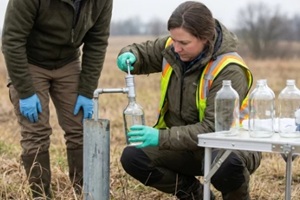
- The Maryland Department of the Environment recommends annual testing for coliform bacteria, nitrates, and dissolved solids. It also recommends testing after unexplained illnesses and if someone in the house is pregnant.
- The Virginia Department of Health recommends annual testing for bacteria and nitrates, with a broader chemical panel every few years once a baseline is established.
- West Virginia’s Department of Health directs well owners toward coliform, metals, and combined nitrate-nitrite testing through their local health department.
Additional testing makes sense after flooding, nearby construction or excavation, any repair or replacement of well system components, or any noticeable change in how the water looks, smells, or tastes.
Get a Documented Profile of Your Well Water From Tri-County Pumps
Regular, professional testing of your well provides an accurate, current profile of the water composition. This helps you make informed decisions about the right treatment for your home.
Tri-County Pumps is family-owned and operated. We’ve been helping homeowners in the Tri-State area since 1991 understand their water quality needs and build appropriate treatment plans.
You shouldn’t have to guess whether your well water needs a closer look. Call Tri-County Pumps at (301) 882-2776 or schedule your well water testing online to get a documented profile of your well. We’re here when you need us. Let’s Keep It Flowing®.