Jun 24, 2026 · 6 min read· Summarize in ChatGPT
| In This Article: Your water softener may look fine from the outside, while hidden issues affect your plumbing, laundry, dishes, and daily water use. Small warning signs often show up before a system fails, and knowing what to watch for can tell you when to call a pro. |
Summer has a way of putting household water systems to work. Guests stop by for long weekends, laundry piles up after pool days and yard projects, and outdoor cleaning jobs start showing up on the calendar.
A water softener that’s been running quietly in the background can suddenly have a heavier workload than it had just a few months ago.
Water softener maintenance often gets pushed aside because the warning signs can be subtle at first. Hard water usually doesn’t announce itself with a sudden shutdown. Small changes around the house often show up long before larger performance problems appear.
The Summer Strain: Why Your Softener Is Working Overtime
Summer tends to increase household water use. EPA WaterSense estimates that nearly one-third of a household’s water may be used outside.
Add extra showers, muddy clothes, filled kiddie pools, driveway washing, and house guests, and your water softener may be handling a much higher volume than it did during colder months.
A hidden issue develops when a softener isn’t running at full efficiency. Resin inside the system has a limited capacity for removing hardness minerals.
Higher water demand can exhaust that capacity more quickly, allowing hard water to flow through your plumbing system.
Water softener maintenance protects the parts of your home that rely on water every day, including fixtures, appliances, plumbing components, and water-using equipment.
Sign 1: The Infamous “Salt Bridge”
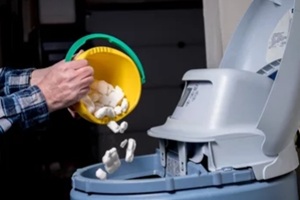
If a water softener stops working properly, a salt bridge is often one of the first things to check. A water softener salt bridge happens when salt hardens into a shelf inside the brine tank, leaving space beneath it.
Everything can look normal at first glance because the tank still appears full of salt. Salt sitting above the water can’t create the brine solution needed for regeneration, so the system slowly loses performance.
Some homeowners can carefully loosen a bridge manually while taking care not to damage the tank. Persistent buildup usually points toward a larger maintenance issue.
Sign 2: “Salt Mushing” at the Bottom of the Tank
Salt mushing in the brine tank can prevent the system from drawing brine properly, leaving the softener unable to regenerate as it should.
Salt settles and forms a heavy, sludge-like layer near the bottom of the tank. Brine production quickly becomes restricted when the intake area gets clogged up with thick salt buildup.
As the Water Quality Association glossary explains, salt mushing and bridging can interfere with proper salt circulation. Regeneration cycles may continue to run, though the system isn’t getting the proper salt concentration to recharge the resin.
Humid weather can contribute to salt clumping issues. Maryland and Virginia summers often bring extended periods of humidity, which may create conditions in which salt handling problems occur more often.
The best prevention is by using crystal salt and not purchasing refined pelleted salt for your brine tank.
Sign 3: Hard Water Spots on Your Summer Best
White spots on glasses after a dishwasher cycle often return before homeowners realize what’s happening. Hard water spots on summer laundry can show up as stiff towels, dull colors, or fabrics that don’t feel as soft as usual.

The U.S. Geological Survey explains that hard water minerals can leave film and deposits on dishes and household surfaces. Soap and detergents also become less effective in hard water conditions.
When the resin is overloaded or coated with minerals, it may not handle higher water use very well.
Sign 4: The System Is Regenerating at the Wrong Time
Many systems regenerate on a preset schedule. A home that suddenly starts using higher volumes of water can create a capacity gap.
Imagine a softener set to regenerate every three days at 2:00 a.m. Summer guests arrive, laundry doubles, and outdoor water use rises. Soft water capacity may run low by late afternoon, leaving several hours before the next scheduled cycle begins.
Hard water breakthrough can appear as inconsistent performance throughout the day. The North Dakota State University Extension notes that regeneration timing depends on factors such as water hardness, water use, system capacity, and the exchange media inside the softener.
Having a metered softener that regenerates based on gallons used can help prevent this issue.
Sign 5: Water Pressure Feels Low Throughout Your Home
Lower shower pressure often leads homeowners to look for a well pump issue. Water treatment equipment can sometimes create the problem.
Mineral buildup, sediment accumulation, clogged injectors, and compacted resin beds can restrict water movement through the system.
Virginia Cooperative Extension notes that excess mineral scaling in pipes can reduce water flow and pressure. Water pressure may gradually decrease as the softener becomes a bottleneck.
A professional well water treatment tune-up can help identify the actual source of the problem before unnecessary repairs are considered.
Sign 6: Your Salt Usage Has Drastically Changed
Your brine tank can tell you a lot. Salt levels that barely move may indicate a salt bridge or a valve issue preventing normal operation.
Excessive salt use can point toward short cycling or high-demand water softener settings that no longer match your household’s water usage patterns.
Sudden changes in salt consumption deserve attention, especially if hard water symptoms appear around the same time.
The Pre-Summer Professional Tune-Up Checklist
Routine service gives homeowners a chance to catch performance issues before summer demand increases.
1. Water Hardness Re-Testing
Mineral levels can shift over time. Re-checking hardness levels helps confirm that system settings still align with actual water conditions.
2. Valve and Injector Cleaning
Small components inside the system move water and brine during regeneration. Cleaning these areas can improve performance and restore proper flow.
3. Resin Bed Restoration
Specialized cleaning products can remove iron and mineral buildup that’s attached to resin beads. Resin does the hard work inside the softener, and buildup can reduce its ability to remove hardness minerals.
4. Optimization of Settings
Programming updates can improve efficiency and adjust the system for anticipated seasonal water use.
The University of Minnesota Water Resources Center explains that demand-based regeneration systems use measured water use to determine when regeneration is needed. In contrast, older time-clock systems regenerate on a set schedule.
Protect Your Home’s Plumbing Before the Heat Hits
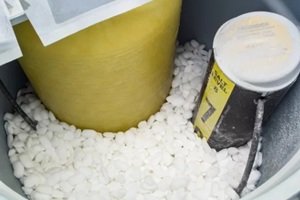
Water softener maintenance helps reduce soap waste, improve performance, and support the equipment connected to your home’s plumbing system. Small issues often become easier to manage when they’re identified early.
Our family-owned team at Tri-County Pumps has been helping homeowners across Maryland, Virginia, and West Virginia since 1991 through education, experienced service, and whole-home water solutions.
Reach out today for Tri County water softener service and let us help Keep It Flowing® through the high-demand months ahead.