Oct 6, 2026 · 7 min read· Summarize in ChatGPT
Homeowners with private wells should understand the processes that can allow bacteria to enter their well system. This is a common problem that can be treated and rarely means the well was built poorly or has been neglected.
In most cases, a positive result for bacteria on a well-water test is simply a sign that a pathway has opened or a condition has developed that allowed bacteria to reach the water column. Finding which one is responsible is the first step toward addressing it.
| In this article: Learn the physical pathways that allow bacteria into a private well, which site conditions make those pathways more likely, and when it’s time to schedule a professional casing assessment. |
Two Types of Bacteria Commonly Tested for in a Private Well
While many kinds of bacteria can grow in a private well, including sulfur and iron bacteria, lab tests generally check for coliform and E. coli, which are the two that are commonly regulated.
Both coliform and E. coli occur naturally in soil and surface water. Precipitation and runoff can move them from one area to another across the land surface, but healthy soil filters them out before they reach the deeper groundwater that most home wells tap into.
Coliform bacteria feed on decaying plant matter and tend to be especially present in wooded areas where leaves and organic material break down in the soil. E. coli is associated with animal sources and is most commonly found near farmland and areas with livestock. That pattern holds across many properties in Maryland, Virginia, and West Virginia, though it isn’t a hard rule. Either type can show up in any setting if conditions allow it.
A positive test for bacteria doesn’t necessarily mean there’s a continuously active pathway into your well. But it does mean that bacteria reached the water column at some point and the source is worth investigating.
The Centers for Disease Control recommends private well owners test annually for bacteria and other contaminants, with additional testing after any flooding or major environmental change near the well.
Four Common Causes of a Positive Test for Bacteria
Across Maryland, Virginia, and West Virginia, bacteria in a private well can often be traced to one of four causes.
1. Surface Water Entering the Well
A well casing that has corroded, cracked, or deteriorated with age can allow surface water to bypass the soil’s natural filtration and reach the water column more directly. Older steel casings are particularly prone to this. Soil chemistry can corrode them from the outside in, and by the time a homeowner notices rust at the surface, the casing below ground may already have thin spots or hairline cracks.
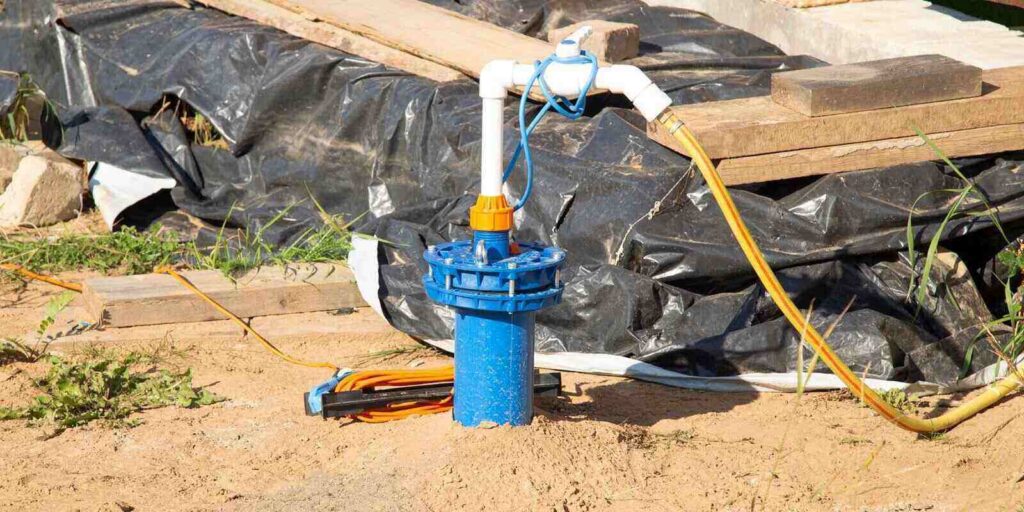
A damaged or improperly fitted well cap is the more direct entry point. Precipitation can pool around the wellhead during and after rain, and a cracked, loose, or missing cap gives that water, and anything it carries, a path down into the well.
Site drainage matters even without a flood. Grading that directs runoff toward the wellhead instead of away from it creates an opportunity for contamination every time it rains. Homeowners who add a patio one year and then regrade a flowerbed the next can gradually turn the area around the wellhead into a collection point without realizing it.
Floodwater that reaches a damaged casing can allow anything it’s carrying to enter the water system, and bacteria that get in may survive for months if left untreated. For this reason, state health departments in Maryland, Virginia, and West Virginia all recommend testing private wells after any significant flooding.
2. Insect Intrusion Through the Well Cap
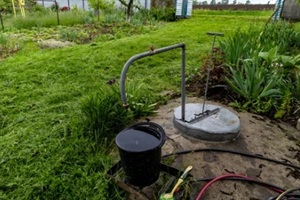
A well cap that isn’t sealed tightly enough to keep out insects can become a nesting site for spiders, earwigs, and other small pests. Once they establish themselves under the cap, their waste and remains can drop directly into the well.
This pathway is easy to overlook because the cap may appear intact from the outside. The gaps that allow insects in can be small, just enough for a spider or earwig to find its way beneath the seal. Over time, biological material can accumulate in the well and produce a positive bacteria test even when the casing and surrounding grading are in good condition.
Checking under the well cap periodically, especially during warmer months when insect activity is highest, can help identify this issue before it affects your water quality.
3. Contamination From Water Source Itself
In some cases, the bacteria aren’t entering through the well’s physical structure at all. The underground stream or aquifer feeding the well may carry bacteria from a source beyond the property, or a nearby septic system may be failing.
This pathway is different from surface water entry because the contamination originates below ground, in the water supply that feeds the well. Addressing it may require a different approach than repairing a casing or regrading a wellhead, and identifying it usually starts with ruling out the other, more common surface-level causes first.
4. Stagnant or Unused Wells
A well that hasn’t been used for an extended period can develop a localized bacterial colony over time. Without regular water movement through the system, bacteria that may have entered through any small opening, or that were present at low levels in the water, can multiply in the standing water column.
Seasonal properties, vacation homes, or wells that were taken out of regular service are the most common situations where this occurs. If you’re returning to a property after an extended absence, testing the water before resuming use is a straightforward precaution.
What Homeowners Can Observe During a Surface-Level Wellhead Assessment
Looking over the area around the wellhead, especially after a relatively heavy rain, can tell you a lot about the exterior of your system. Check for grading that slopes toward the casing rather than away from it, vegetation growing against the casing, a loose or cracked cap, and standing water.
Also, check the distance between the well and the drain field of any nearby septic systems. Maryland requires at least 100 feet between a septic absorption area and a private well, and Virginia has similar setback tables. If your well and drain field were installed decades apart, or either system has been modified since the original permit, you should confirm that those distances still hold.
When Professional Casing Diagnostics Provide Additional Information
A surface assessment has limits and can’t tell you what’s happening to the casing 40 or 60 feet below ground. A professional casing diagnostic uses downhole camera equipment to catch cracks, joint separations, and corrosion below the surface, where it can’t be seen from above.
If your area has flooded, your wellhead has seen significant ground disturbance from construction or excavation, or you’ve had a positive bacteria result, contact a plumbing service for a professional well diagnosis.
Start With a Diagnosis and a Water Test
Once you know the physical pathways that let bacteria into a private well, you’re better equipped to decide on wellhead upkeep and drainage, and when to have the water tested.
Tri-County Pumps is family-owned and operated since 1991 and serves our community in the Tri-State area. Our top priority is providing exceptional service while building long-lasting relationships with our customers.
Our in-home water analysis, offered at no cost, covers hardness, iron, and pH. Bacteria tests require off-site labs and are an additional expense; our team can take samples and send them off.
If you’ve had a positive bacteria test or suspect your well has been compromised, our well and septic diagnostic team can assess the surface conditions and casing, as well as any other issues such as flow or water quality. Contact Tri-County Pump Service at (301) 882-2776 or schedule a well assessment online.