
Aug 10, 2026 · 6 min read· Summarize in ChatGPT
If you’ve noticed your well pump kicking on and off repeatedly throughout the day, even when no one is running water, that’s not normal operation. What you’re hearing is called short cycling, and it’s one of the clearest warning signs that a well system needs attention.
Learn what causes it, why it accelerates motor wear, and when to call for service.
What Short Cycling Is and Why It Is Not Normal
A properly functioning well pump runs in cycles. It turns on, builds pressure to the cut-off point, shuts down, and stays off until household demand drops the pressure low enough to trigger the next start. That cycle might happen several times a day under normal use, with each run lasting long enough for the system to do its job.
Short cycling breaks that pattern. Instead of running full cycles, the pump turns on and off in rapid succession, sometimes within seconds. When this happens, the pump is not delivering water efficiently, and every unnecessary start draws a surge of electrical current through the motor. The pump is doing far more work per gallon delivered than it was designed to handle, which can dramatically reduce its operational life.
Professional, experienced technicians can diagnose and repair problems with your well pump, including short cycling.
A Common Cause Is a Poorly Charged Pressure Tank
The pressure tank (also known as a surge vessel) is the part of the well pump’s system most likely responsible for short cycling, and the specific problem is a loss of its air charge.
A pressure tank works by holding both air and water under pressure. When the tank is charged correctly, the pressurized air allows the system to deliver water to the home at a constant rate, and gives the pump enough time to complete a full cycle before the pressure drops.
If a tank isn’t charged properly and has no air cushion, water fills the entire tank, leaving no air to pressurize it. This causes the pressure in the tank to drop almost instantly after each pump start. The pressure switch detects the drop and triggers the next start before the previous cycle has finished. The pump never catches up, and the short cycling loop repeats.
In some cases the technician can drain the tank and recharge the air bladder to the correct pressure (when the bladder is not ruptured), typically set two PSI below the pressure switch cut-in point. The longer short cycling goes unchecked, the more wear accumulates on the pump motor, and the greater the chance that the motor will quit operating entirely.
A Waterlogged Pressure Tank Most Triggers Short Cycling

A waterlogged tank is a common explanation for a short-cycling pump.
Inside the pressure tank is a bladder that separates the air charge from the water. When that bladder fails, it can no longer hold the air charge, resulting in the same short-cycling behavior as a poorly pressurized tank. The fix in this case is a full pressure tank replacement rather than a recharge.
Other Reasons May Cause Short Cycling
An incorrectly calibrated pressure switch can also cause the pump to cycle too frequently, even when the pressure tank itself is in good shape. If the differential between cut-in and cut-off pressures is set too narrowly, the switch triggers another start before the tank has enough time to deliver water through a complete cycle.
Well yield is a third common cause of an issue similar to short cycling. If the well does not recover water quickly enough between pump cycles, the pump can lower the water level too quickly. Some pump systems have a safety shut-off that prevents them from running if they aren’t drawing enough water.
The result is a pump that can start, drain the water in the well, and then shut off before completing a full cycle. Low-yield, short-cycling like this often shows up alongside reduced water output at the tap and points to a conversation about the well itself or what well system best accommodates the low yielding well.
Why Letting Short Cycling Continue Increases the Damage
Each time a pump motor starts, it draws a surge of current several times higher than its normal running load. Under regular cycling, that surge happens a manageable number of times per day. Under short cycling, it can happen dozens of times per hour.
That sustained electrical stress accelerates wear on both the motor windings and the capacitor. When the issue is left uncorrected, what starts as a simple pressure tank recharge or replacement can become a full pump replacement. Energy costs also increase, since a motor that constantly starts consumes more power than one running efficiently through full cycles.
What To Check and When To Call for a Professional Assessment
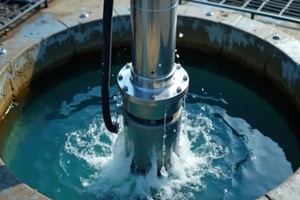
Two quick checks can help you see if your pressure tank deserves a closer look. First, tap the tank from top to bottom. One with a healthy air charge will sound hollow near the top. A waterlogged tank will sound solid from bottom to top. Second, check the air valve at the top of the tank with a standard tire gauge. Air should come out and give you a reading in the normal range for your tank. If water comes out of the Schrader valve, your tank is waterlogged.
If the tank passes both checks but the pump is still short-cycling, or if you notice pressure fluctuations, reduced water output, or a pump that runs with no household demand at all, those are signs that the system needs immediate professional attention.
Tri-County Pump Service has been family-owned and operated since 1991, helping homeowners across Maryland, Virginia, and West Virginia diagnose and resolve well pump problems before they become worse. Contact Tri-County Pumps today for a short cycling assessment in MD, VA, or WV and Keep It Flowing®.