
May 11, 2026 · 7 min read· Summarize in ChatGPT
| In this article: What a low-water cutoff switch does, why wells in Frederick and Washington County are especially vulnerable to dry-running damage, and how to tell if your system needs one before the pump burns out. |
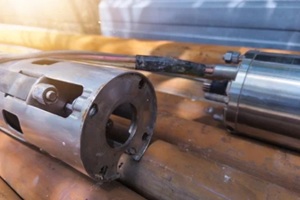
Your submersible well pump is designed to move water upward. It is not designed to run without being submerged in water. When the water level in your well drops below the pump’s intake, even briefly, the motor loses its cooling source and starts generating heat it can’t shed. That’s dry-running, and it’s one of the fastest ways to destroy a submersible pump.
A low-water cutoff switch exists to prevent exactly that. It monitors conditions in the well and shuts the pump down before dry-running causes damage. Simple concept, but knowing whether your well actually needs one depends on where you live, what your geology looks like, and how much water your household or operation draws during peak months.
What a Low-Water Cutoff Switch Actually Does
The switch monitors for one of two conditions, depending on the type installed: either it detects that the water level has dropped to a preset depth, or it senses abnormal pump cycling that indicates the pump is losing contact with the water column.
When it trips, the switch shuts the pump off and keeps it off until conditions improve. Some models include a timed restart that checks periodically whether the water level has recovered. Others require a manual reset.
Traditional manual low-water cutoff switches shut off when it detects the water pressure has dropped below 20 psi. The goal is the same either way. Keep the pump from running dry long enough to overheat the motor windings.
Why Frederick and Washington County Wells Are at Higher Risk
Not every well in every region needs a cutoff switch. But in Frederick and Washington County, the geology creates conditions where water levels can drop fast, even during seasons when you wouldn’t expect it.
The Karst Factor
Most wells across the Hagerstown-Frederick Valley draw from karst formations. That means the water isn’t stored in evenly packed sand or gravel like a sponge. It moves through fractures, channels, and dissolved-out passages in limestone and dolomite.
Karst aquifers in Maryland recharge quickly when it rains, but they also lose water quickly when pumping demand increases. Hydrologists call these systems “flashy” because water levels respond fast in both directions. A well that’s fine at 7 a.m. can be struggling by mid-afternoon if irrigation, livestock waterers, and household use all spike at once.
That rapid drawdown is what makes cutoff switches especially relevant here. In a sand aquifer, the water level tends to drop gradually and predictably. In limestone, the cone of depression around your well can steepen quickly, and the pump intake can go from fully submerged to partially exposed in a short window.
The Neighbor Problem
Two wells 200 yards apart can behave completely differently in karst geology because the underground fracture network isn’t uniform. Your neighbor’s well might sit on an active conduit with strong flow, while yours draws from a tighter fracture zone. During peak demand months, one property runs fine and the other starts sputtering.
That variability is another reason cutoff switches matter in this region. You can’t predict how your specific well will respond to seasonal demand based on what the property next door is experiencing.
Signs Your Well May Need a Cutoff Switch
If your well has never given you trouble, you might not think about protection until something fails. That’s how most people find out they needed a cutoff switch, after the fact. But there are patterns worth paying attention to, especially heading into the high-demand months from May through September.
Sputtering Faucets During Heavy Use
When the water level drops near the pump intake, faucets start releasing bursts of air mixed with water. The water may look milky from micro-bubbles. Pressure swings between normal and weak. This is your well telling you the pump is intermittently losing contact with the water column.
If it only happens during peak use and clears up when demand drops, that’s a drawdown pattern. A cutoff switch would protect the pump during those surge periods instead of letting it cycle through dry-running conditions repeatedly.
Rapid On-Off Cycling
When air enters the system, the pressure switch can start triggering rapidly, turning the pump on and off every few seconds. That short cycling generates heat the motor can’t dissipate, and it’s one of the most common causes of premature pump failure.
If you hear your pump clicking on and off in quick succession when the household is running multiple fixtures, that’s a sign the system needs protection. A cycle sensor type cutoff switch is specifically designed to detect this pattern and shut things down before the motor overheats.
You’ve Already Replaced a Pump Due to Burnout
This one is straightforward. If a technician has told you the previous pump failed from overheating or dry-running, installing a cutoff switch on the replacement is a practical decision. The conditions that killed the first pump haven’t changed. The geology is the same, the well depth is the same, and your water usage patterns are probably similar. Without a cutoff switch, you’re relying on the same setup that already failed once.
Seasonal or Agricultural Water Demand
Properties with irrigation systems, livestock operations, or pools face higher drawdown risk during summer months. The demand profile is different from a household running a few faucets and a washing machine. When GPM requirements go up, the cone of depression around the well deepens faster, and the window between “pump is fine” and “pump is running dry” gets shorter.
For agricultural operators in Frederick and Washington County, a cutoff switch is often less of a question and more of a standard part of the system.
What Happens Without One
A submersible pump motor is cooled by the water flowing past it. When the water drops below the intake, cooling stops. The motor keeps running because the pressure switch is still calling for water, and the temperature climbs until the windings fail.
Replacing a burned-out submersible pump means pulling the entire assembly out of the well, which involves the pump, motor, drop pipe, wiring, and sometimes the pitless adapter. It’s not a quick swap. It’s a full service call, and in peak summer when every well company in the region is busy, the wait time can stretch.
A cutoff switch is one of the less expensive components in a well system. Compare that to a full pump replacement, and the protection-to-cost ratio is hard to argue with.
How Tri-County Pump Service Approaches the Decision
The technicians at Tri-County Pump Service, Inc. don’t recommend cutoff switches as a blanket upsell. The recommendation starts with measurements.
Static water-level and pumping-level readings show how far the water drops during normal use and during peak demand. Those numbers, combined with the well’s depth, recovery rate, and the specific limestone formation it draws from, determine whether a cutoff switch is warranted and which type fits the situation.
We often recommend low-water cutoff switches in wells that yield 5 gallons per minute or less, but we do factor well depth into these scenarios.
The point is that the decision is based on what the measurements show for your specific well, not a one-size recommendation. Washington County limestone aquifers and karst conditions vary property to property, and the approach should too.
When to Schedule an Evaluation
If your well is showing any of the signs above, or if you’re heading into summer with a system that’s never been tested under peak demand, scheduling a drawdown evaluation before July is the practical move.
The sputtering, the cycling, the pressure drops during heavy use, those are early indicators. They’re easier and cheaper to address now than after a motor failure in August.
Call Tri-County Pump Service, Inc. at (301) 882-2776 for a professional evaluation and Frederick well pump repair. We’re here when you need us.