Feb 16, 2026 · 6 min read· Summarize in ChatGPT
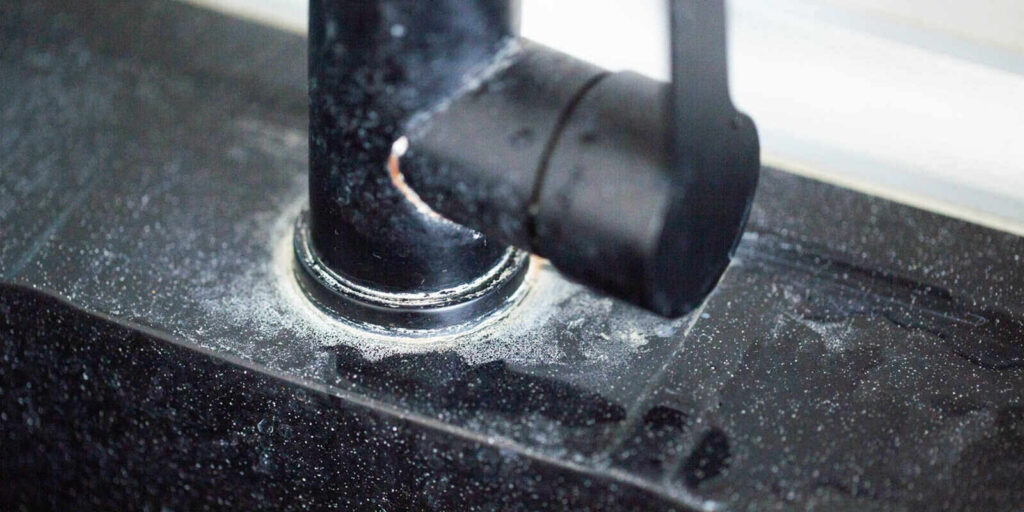
Hard water is a household issue that many homeowners observe without fully comprehending its underlying causes. The effects of hard water can manifest slowly and often in unexpected places, ranging from cloudy glassware and soap that never seems to rinse clean to scale buildup inside water heaters and plumbing.
For homes on private wells, especially across Maryland and the surrounding region, these issues usually stem from local geology rather than from anything wrong with the water source itself. If your water feels off or your equipment seems to work harder than it should, the answers often start with a basic understanding of water hardness.
| In This Article: Learn what hard water actually is, why it’s so common in Maryland well systems, the benefits of water treatment in Maryland, and how mineral buildup affects plumbing, appliances, and everyday water use. |
Why Hard Water Shows Up in So Many Maryland Homes on Wells
Hard water is mainly the result of dissolved calcium and magnesium picked up as groundwater moves through soil and rock.
Rainwater and snowmelt absorb carbon dioxide as they pass through the atmosphere and ground; that slight acidity allows water to dissolve minerals from the surrounding geology. In areas with limestone or dolomite, calcium and magnesium readily enter the water supply.
Maryland’s underlying geology strongly influences how water chemistry develops and behaves across different areas. Many private wells draw from fractured-rock aquifers common in the Piedmont region or from sand-and-gravel aquifers found in the Coastal Plain.
Water interacting with carbonate-rich formations often ends up hard and slightly alkaline, a pattern well documented in regional groundwater studies. For homeowners, this explains why two wells only miles apart can produce water with very different behavior and hardness.
How Heating and Pressure Changes Bring Hard Water Problems to the Surface
Hard water often goes unnoticed until it is heated or pushed through appliances and fixtures, where its effects become more obvious.
Temperature and pressure changes disrupt the balance of dissolved minerals, which is why early signs of hardness usually appear in water heaters, dishwashers, and other high-use equipment.
Temporary and Permanent Hardness Explained in Plain Terms
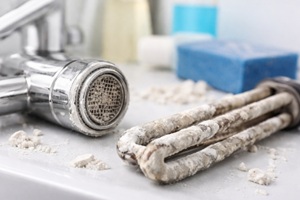
Hardness shows up in two primary forms. Temporary hardness is linked to bicarbonate and carbonate chemistry. Heating water causes dissolved minerals to separate more easily, eventually leading to scale formation. That white crust inside a kettle or on a water heater element is a classic example.
Permanent hardness involves calcium and magnesium tied to sulfate or chloride. These minerals don’t precipitate during boiling, yet they still contribute to long-term buildup inside pipes and appliances.
Heat and pressure changes push minerals out of solution. That’s why water heaters, tankless systems, dishwashers, and coffee makers often reveal hard water issues before faucets or cold water lines do.
What Hard Water Does Inside a Home Day After Day
The effects of hard water build gradually and show up in ways homeowners feel every day. Over time, scale accumulation can reduce flow, disrupt valve operation, and shorten the life of appliances.
Scale and Wear on Plumbing and Appliances
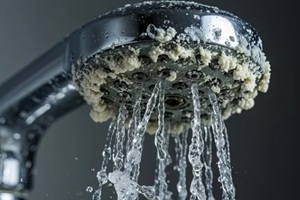
Mineral scale forms on fixtures, inside pipes, and on heating surfaces, which can restrict water flow, interfere with valves, and shorten the lifespan of appliances. Water heaters are especially vulnerable since heating accelerates mineral deposition.
Studies on electric water heaters running with hard water have shown heavy scale accumulation and premature element failures under certain conditions. Even when energy use doesn’t spike immediately, wear and failure risk still increase.
For Maryland well owners, the situation often feels frustrating. The water may be safe to drink, yet it’s tough on the mechanical side of the home, especially anything that heats or sprays water.
Soap, Detergents, and the “Film” Feeling
Calcium and magnesium directly interact with soaps and detergents, reducing their overall effectiveness. Common results include soap scum in showers, cloudy glassware, extra detergent use in laundry, and a lingering film on skin after washing.
Hard Water Versus Bad Water
Hard water is typically viewed as an inconvenience rather than a direct health risk; it’s treated to improve comfort, protect plumbing, and reduce maintenance headaches, not to address pathogens or health-driven contaminants like bacteria or nitrates. That distinction matters when deciding what type of system makes sense.
Treatment Options That Match the Problem Instead of Guessing
Hard water treatment in Maryland works best when it’s based on how the water behaves and what the homeowner wants to improve. Understanding what each option actually does helps narrow the choice to systems that solve the problem rather than masking it.
Whole House Water Softeners and True Hardness Removal
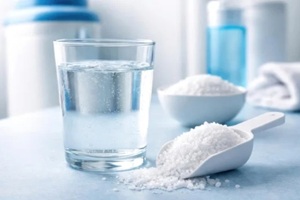
Ion exchange softeners are the most common method, removing hardness minerals by exchanging ions and using salt to refresh the system from time to time.
For well water homes, this approach treats the entire water supply at the point of entry, improving soap performance and protecting plumbing and appliances throughout the house.
Softening targets hardness specifically. It doesn’t remove every possible contaminant, which is exactly why it works well when scale and soap issues are the main concerns.
Sodium Considerations and Drinking Water Choices
The use of sodium chloride during regeneration can result in higher sodium concentrations in softened water. The increase is predictable and often modest, yet homeowners on sodium-restricted diets should speak with a physician. Many homes address this by installing a separate drinking water tap or point-of-use system.
Salt-Free Conditioners (and What They Actually Do)
Salt-free systems are designed to reduce scale formation rather than remove hardness minerals. With minerals still in the water, most users notice little difference in their soap’s behavior. These systems may help with buildup in some situations, yet they don’t provide true softening.
Reverse Osmosis for Drinking Water
Reverse osmosis systems reduce many dissolved substances, including minerals, and work best as point-of-use options for drinking and cooking. In homes with hard well water, RO is often paired with whole-house treatment rather than used as a standalone fix.
Clear Answers and Trusted Help for Hard Water Concerns
Once the underlying water chemistry is clear, selecting the right treatment option becomes much easier.
At Tri-County Pump Service, Inc., our family-owned team has helped homeowners across Maryland, Virginia, and West Virginia address hard water and well system concerns for over 30 years. We focus on providing clear explanations, proven solutions, and long-term reliability for the entire home water system.
If hard water is causing problems in your home, you can schedule service online, call (301) 882-2698, or use our online contact form to get started.