Mar 30, 2026 · 7 min read· Summarize in ChatGPT
Spring often reveals plumbing problems that remained hidden all winter. As the ground thaws and seasonal rains arrive, buried water and sewer lines can shift, weaken, or start leaking, and the warning signs often show up in your yard, your drains, or your water pressure.
For homeowners who rely on well or septic systems, these changes are not to be ignored. What appears to be a simple clog or a damp patch in the grass can indicate a deeper issue underground.
| In This Article: You will learn the common springtime signs that may indicate a damaged or failing pipe, why these issues tend to surface after freeze-thaw cycles, and when excavation becomes the practical solution for a lasting septic system repair. |
Why Spring Thaw and Heavy Rains Often Reveal Hidden Underground Pipe Damage
Winter places stress on buried water and sewer lines, even when everything inside your home seems to be working fine.
With dropping temperatures, soil moisture can freeze and expand, putting extra force on anything buried below the surface. That movement can strain pipe joints, shift bedding, and worsen small cracks that formed years ago.
Spring also brings saturated soil. Melting snow and steady rainfall raise groundwater levels, which can push water into damaged sewer lines through cracks or separated joints.
Engineers refer to this as infiltration; higher groundwater levels often increase the volume of water entering compromised pipes. A line that handled normal use during dry months may struggle once spring moisture adds extra flow.
Softened soil creates another problem. Wet ground offers less stable support around buried piping. If a pipe already has weak joints or aging materials, reduced support can accelerate settling or collapse.
Homes built decades ago across Maryland may still have older service lines or sewer materials nearing the end of their lifespans; spring weather often acts as a stress test that exposes those weaknesses.
Persistent Drain Problems That Go Beyond a Simple Clog
A single slow sink is usually a localized blockage, but multiple slow drains, gurgling sounds, or backups in the lowest fixtures tell a different story. When tubs, toilets, and sinks start acting up together, the restriction is often farther down the main building sewer or septic line.
For septic-connected homes, common warning signs include:
- Slow-draining fixtures throughout the house
- Gurgling noises in plumbing
- Sewage backups
- Damp soil or odors near the drainfield
Spring conditions can amplify these symptoms. Saturated soil reduces a drainfield’s ability to absorb effluent, so a borderline system in winter may start backing up once the ground is soaked.
If clearing a line provides only temporary relief and the problem returns quickly, there may be a cracked, collapsed, or root-damaged section underground.
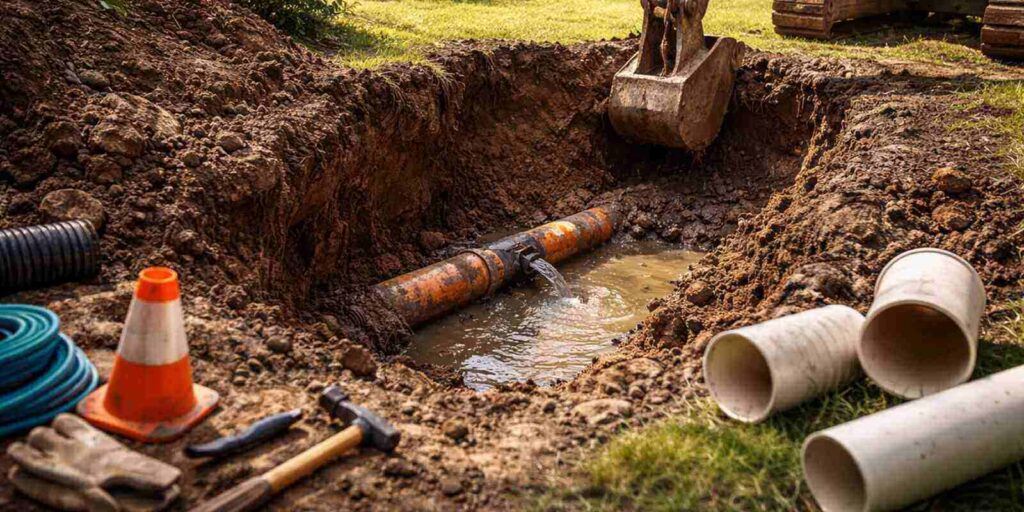
In those cases, repeated snaking treats the symptom rather than the structure. Excavation allows a technician to physically expose the affected section, replace the compromised pipe, and restore proper slope and support.
Yard Changes That Suggest a Leaking or Failing Underground Line
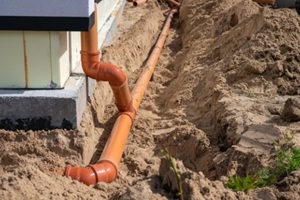
Spring is when homeowners spend more time outdoors, which makes subtle yard changes easier to spot. Some of the clearest clues of a buried pipe problem appear right in the yard, long before you see anything indoors.
Soggy Patches and Standing Water in Dry Weather
A soft, wet area that lingers long after rainfall may point to a leak in a water service line or a failing sewer or septic component. If you notice pooling water over the drainfield or along the route of a buried line, that moisture may be coming from below, not the sky.
For municipal or well supply lines, an unexplained wet spot in the lawn can indicate a break between the water source and your home. If you shut off the water inside and still hear movement or see signs of water flow, the issue may be outside.
Unusually Lush Grass or a Developing Depression
Grass growing thicker and greener over one strip of yard can signal nutrient-rich wastewater surfacing below. A persistent sewage odor in that area strengthens the suspicion of a failing line or septic component.
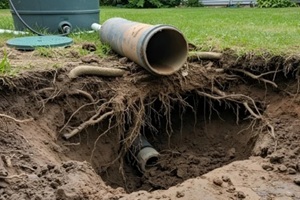
A dip or small sinkhole forming along the pipe route is even more concerning. When water escapes from a defective pipe, it can wash away fine soil particles and create underground voids, and as support erodes, the surface may settle.
Once bedding is compromised, stabilizing the soil and replacing the damaged section often requires excavation to restore structural support.
Fluctuating Water Pressure and System Behavior That Feels Off
Changes in water pressure often get blamed on fixtures or household demand, yet fluctuating pressure can also indicate water escaping underground.
Well system owners may notice a pump cycling more frequently or pressure that drops unexpectedly. Homes on municipal water may notice a larger bill even though daily habits and usage have not changed.
Here’s how symptoms can differ between supply and drain concerns:
| Symptom | Possible Supply Line Issue | Possible Sewer Or Septic Issue |
| Low or fluctuating pressure | Leak in the well or service line | Rarely related |
| Higher water bill | Hidden supply leak | Not typical |
| Gurgling drains | Unlikely | Main sewer restriction |
| Wet lawn strip | Supply leak | Leaking sewer or drainfield |
| Sewage odor outdoors | No | Yes |
When pressure testing, meter observation, or system checks point toward a buried supply line leak, excavation may be the most practical septic system repair method. Replacing a failed section restores steady pressure and prevents ongoing soil saturation that can affect nearby structures.
Recurring Root Intrusion and Aging Pipe Materials That Signal Structural Failure
As landscaping ramps up in spring, plumbing problems often reappear, sometimes triggered by digging, shifting soil, or winter damage.
Roots naturally seek moisture and nutrients; they tend to enter through existing cracks or loose joints, rather than breaking solid pipe. Older materials, such as clay tile or certain mid-century fiber pipes, are especially susceptible to joint separation and deterioration.
If you’ve had a main line cleared and the blockage returns within months, the pipe may be structurally compromised.
Root intrusion in the same location repeatedly usually indicates an opening that allows regrowth. At that point, cutting roots provides temporary relief, while replacing the damaged section addresses the source.
Homes with private wells and septic systems rely on the full water cycle working correctly, from supply to drainage. When a sewer line leaks, it can contaminate soil, and when a supply line is damaged, it can impact pressure and how well the system runs.
A professional evaluation typically includes confirming whether the problem is on the supply or drain side, pressure testing or camera inspection, and pinpointing the failure location.
If the pipe is collapsed, separated, or unsupported due to soil erosion, excavation offers direct access for lasting septic system repairs rather than repeated short-term fixes.
Get Ahead of Spring Pipe Problems Before They Grow
Spring symptoms rarely improve on their own. If you’re noticing backups, soggy patches in the yard, or inconsistent water pressure, it’s time to take a closer look before the issue spreads underground.
Since 1991, family-owned and operated Tri-County Pump Service, Inc. has helped homeowners throughout Maryland, Virginia, and West Virginia address well, septic, and water system needs. Our team will walk you through what we find, clearly explain your options, and recommend a septic system repair solution built to last.
If your property is sending warning signs this spring, let’s address them the right way. Call (301) 882-2698 to speak with our team, book your appointment online, or reach out through our contact form today. Let’s keep your home’s water system running strong from the ground up.