
Dec 22, 2025 · 6 min read· Summarize in ChatGPT
If your water softener seems to need frequent cleanouts or stops working as smoothly as it should, the salt you use may be part of the problem. For homes on well water and city water alike, the choice of salt plays a quiet role in how efficiently a water softener operates and how much residue collects in the brine tank.
As buildup accumulates, it can gradually reduce system performance, shorten the time between service visits, and compromise long-term reliability.
In This Article: We explain the most common types of water softener salt and rank them based on how they behave inside the system. You will learn what “buildup” actually means, why certain salts leave more residue than others, and how salt purity ties directly to everyday operation. |
What “Buildup” Really Means Inside a Water Softener and Why Salt Choice Affects It
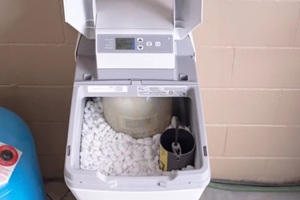
When people discuss buildup in a water softener, they’re usually referring to problems inside the brine tank rather than to scale in pipes or fixtures.
A salt-based softener relies on clean, consistent brine to recharge its resin bed; anything that interferes with that process can reduce efficiency and lead to service issues.
Three common forms of salt-related buildup show up during regular water treatment services:
- Brine tank residue is a gritty sludge that settles at the bottom of the tank when parts of the salt never fully dissolve.
- Salt bridging occurs when a hardened crust forms above the water line, leaving space beneath it where brine should form.
- Salt mushing refers to partially dissolved salt that forms a thick slurry, thereby restricting brine flow.
Each issue traces back to how cleanly a salt dissolves and how much non-soluble material it carries into the system.
Why Salt Purity Follows Predictable Patterns Based on How It’s Made
Most water softener salts fall into one of three families based on how they are produced:
- Rock: Rock salt is mined and mechanically processed, which leaves a wider range of natural minerals mixed in.
- Solar: Solar salt forms as water evaporates from ponds, leaving behind impurities.
- Evaporated: Evaporated salt starts as solution-mined brine that’s refined under controlled conditions, producing a cleaner final product.
The manufacturing process explains why purity levels tend to follow a reliable trend across these options. Small differences in purity may seem insignificant on paper, yet that missing fraction often accumulates as residue in the brine tank over time.
Ranking Water Softener Salt Types Based on Buildup Risk and Brine Tank Behavior
Evaporated Salt for Clean Brine and Minimal Residue

Evaporated salt consistently ranks at the top for homeowners focused on reducing brine tank cleanup.
Its high purity means nearly all of the material dissolves into brine, leaving little behind to collect as sludge. Pellets, nuggets, and crystals labeled as evaporated salt are all designed for this purpose.
Homes with heavy water usage tend to notice the difference fastest. High demand increases regeneration frequency, thereby accelerating residue accumulation when lower-purity salts are used.
Evaporated salt helps keep the system running smoothly between maintenance visits, especially in well water systems with higher hardness levels.
Solar Salt as a Practical Middle Ground for Many Systems
Solar salt performs well in many residential water softener setups, especially when usage is moderate.
Most solar products sold for water treatment are screened and washed, though they still contain slightly more insoluble material than evaporated options. Over time, that difference can lead to additional residue in the brine tank.
System design plays a role here, as cabinet-style softeners with compact brine tanks tend to prefer cleaner salt, while side-by-side systems with separate brine tanks are easier to clean and more forgiving.
Because of this, households using the same salt can experience noticeably different performance and maintenance issues.
Rock Salt and the Higher Likelihood of Routine Cleanouts
Although rock salt can be used in a water softener, it poses the greatest risk of sediment and accumulation within the system.
The natural insoluble content often settles in the brine tank, so periodic cleanouts are part of ownership. Some households may need to remove accumulated residue several times per year.
Deicing salt is not formulated for water softeners and should never be used in place of rock salt intended for softening systems.
Particle size and impurity levels increase the chance of bridging, mushing, and operational problems. Rock salt works best for owners who are comfortable with regular maintenance and understand the trade-offs.
Comparing Salt Types at a Glance
| Salt Type | Typical Purity Range | Buildup Risk | Maintenance Frequency |
| Evaporated | Very high | Low | Minimal |
| Solar | High | Moderate | Occasional |
| Rock | Variable | High | Routine cleanouts |
Pellet Shape, Additives, and What Actually Changes Performance
The shape of salt matters less than most people think. Pellets, crystals, and blocks primarily differ in how they dissolve and in their durability during storage and handling. Many pellet products are compacted versions of evaporated or solar salt.
Some pellets include additives that are designed to reduce mushing or bridging by improving durability. These products can help stabilize brine formation under challenging conditions, though purity remains the primary driver of long-term results.
Block salt is designed for specific softener tanks and may require adjustments to the water level if substituted for another format.
A Cleaner Salt Choice Supports Better Long-Term Performance
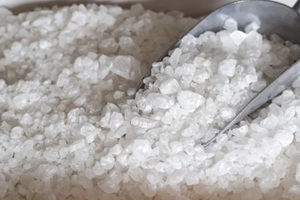
The type of salt you use influences how smoothly your water softener runs and how often maintenance is needed. Higher-purity options tend to dissolve more consistently, reduce residue in the brine tank, and support steadier water treatment performance over time.
At Tri-County Pump Service, we bring more than three decades of hands-on experience with well systems, water softeners, plumbing, and septic services. Our team looks at how every part of your home’s water system works together and takes time to explain what we see and why it matters.
If you’re dealing with buildup, inconsistent softening, or questions about salt selection, we’re ready to help. Get started by scheduling service online, calling (301) 882-2698, or using our contact form to start working with a team that understands your water system inside and out.