

Oct 13, 2026 · 6 min read· Summarize in ChatGPT

The smell of rotten eggs coming from your tap can be as embarrassing as it is disconcerting. The good news is that its sources and treatments are well known.
Primarily, a rotten egg smell in a home’s water is caused by hydrogen sulfide gas. To find the right treatment, you’ll first need to find the source of the smell. For example, assuming it’s coming from the well won’t fix the issue if the source is actually the water heater. To resolve the issue, you’ll want to understand where the source is occurring in your water supply and the different treatment options available.
| In this article: What causes sulfur odor in well water, how to tell whether the source is the well itself, sulfur bacteria, or the water heater, and which treatment, aeration, shock chlorination, or activated carbon filtration, matches each cause. |
What Produces the Sulfur Odor in Well Water
Hydrogen sulfide gas can get into well water in a few ways, and finding the root cause is essential in developing a treatment plan.
For example, if you notice the smell only when using the hot water, the cause may be a chemical reaction within the water heater. The magnesium rod that some heaters use to prevent corrosion can interact with sulfur that occurs naturally in the water, creating hydrogen sulfide gas.
Another common cause of hydrogen sulfide in well water is tied to the geology that the well has been drilled into. Sulfur compounds exist naturally in the rock formations under much of Maryland, Virginia, and West Virginia. As water moves through the rock layers to eventually reach the depth of the well, it can pick up some of this sulfur, which is then pumped directly into the home.
Sulfate-reducing bacteria are a third common source. These organisms live in low-oxygen environments and convert natural sulfate in groundwater into hydrogen sulfide as part of their metabolism.
Diagnosing the Source Before Selecting a Treatment
Does the smell show up in cold water, hot water, or both? Odor in both hot and cold water points to the well system itself, whether that is geological sulfide entering with the groundwater or bacteria established somewhere in the plumbing. An odor that only appears when hot water runs usually means the water heater is producing its own hydrogen sulfide, a separate issue from anything happening at the well.
Timing is the second clue. An odor that comes and goes with the seasons or that gets noticeably stronger after heavy rain often tracks with bacterial activity rather than a fixed mineral source. Sulfate-reducing bacteria respond to shifts in groundwater conditions and oxygen levels, so their byproducts fluctuate in ways a steady geological source does not.
To understand the best treatment options, you’ll need to know both the source of the hydrogen sulfide and its concentration through a water testing service.
When the Water Heater Is the Source
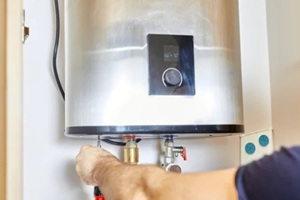
If the odor only shows up when the hot water runs, start with the water heater. Many water heaters use a magnesium anode rod to protect the tank’s lining from corrosion. Magnesium is more chemically reactive than steel, so chemicals in the water react with the magnesium first and leave the tank’s steel lining alone.
But when the water contains sulfates, the reaction with magnesium can produce hydrogen sulfide that gives that distinctive smell at the tap. That’s why the odor shows up only in hot water while the cold tap stays odor-free.
An experienced technician can help you diagnose any issues and repair your water heater, including replacing its magnesium rod with an aluminum or zinc-alloy alternative.
Treatment Options Matched to the Confirmed Source
Common treatment options for a sulfur smell coming from your water include shock chlorination, aeration, and activated carbon filtration. Each solution is designed to solve a different problem.
Shock chlorination treats sulfur bacteria by circulating high concentrations of chlorine through the well and plumbing systems. Once the system is treated, schedule a follow-up test to confirm it held. Recurring odor often means the treatment didn’t fully reach a colony in a section of pipe, the pressure tank, or the well casing. Shock chlorination in some cases only provides temporary relief, requiring a system that is continuously providing treatment.
Air eductor systems address geological hydrogen sulfide by exposing water to air, oxidizing the dissolved gas so it releases before reaching a faucet. Aeration is the more appropriate route when a test points to a mineral source rather than bacteria. However, introducing oxygen into a system where sulfate-reducing bacteria are active can, in some cases, encourage other bacterial growth.
Activated carbon filtration removes what aeration or chlorination leaves behind. It rarely solves a sulfur smell, but it can catch residual dissolved gas after the primary source is addressed and improve taste.
When a Professional Assessment Provides the Most Useful Starting Point
The most effective way to treat a rotten egg smell coming from your water is to first work with a professional to identify the source and cause. In more difficult cases, a water test that measures hydrogen sulfide concentration at different points in your system and checks for bacterial activity provides a starting point for treatment options.
Our water treatment specialists are well versed in the issue of sulfur and identifying the best treatment option based on the source of the rotten egg smell. By pinpointing the problems, a technician can advise you on the most appropriate treatment sequence.
Schedule a Sulfur Odor Assessment With Tri-County Pumps

Matching the right treatment to the right source is the only way to treat hydrogen sulfide odor properly. That includes a thorough assessment and water testing. Tri-County Pumps’ free in-home water analysis checks hardness, iron, and pH. Tests for hydrogen sulfide, however, require laboratory analysis and must be sent off at an additional cost.
Tri-County Pump Service, Inc., is family-owned and operated and has served well owners across Maryland, Virginia, and West Virginia since 1991. Call (301) 882-2776 or schedule service online. We’re here when you need us. Let’s Keep It Flowing®.