
Dec 29, 2025 · 5 min read· Summarize in ChatGPT
Homes that rely on well water place steady demands on their water softener. As mineral levels and water conditions change over time, routine yearly maintenance helps ensure the system continues delivering consistent, softened water.
For homes that rely on well water, yearly attention matters even more since minerals, iron, and other naturally occurring elements place steady demands on water treatment equipment.
| In This Article: Learn what annual water softener maintenance typically includes, how regular upkeep supports system efficiency and longevity, and which early warning signs may indicate service is needed before performance declines. |
Why Yearly Maintenance Matters More for Well Water Homes
Homes on private wells deal with water that changes slowly over time. Mineral content, iron, manganese, and even seasonal shifts in groundwater chemistry all place steady pressure on a water softener.
Unlike city water, well water has no central treatment plant to adjust quality day to day, so the responsibility falls to the homeowner and their water treatment system. A water softener functions as a complete system with moving parts and programmed cycles.
Over the course of a year, performance can drift. Warning signs often include scale on fixtures, dull laundry, soap that refuses to lather, or rising salt usage often trace back to gradual changes inside the unit.
Yearly maintenance gives homeowners a chance to catch these issues early, before water quality drops or efficiency slips.
How a Water Softener Works and Where Problems Tend to Start
Most home water softening systems use an ion exchange resin to capture hardness minerals such as calcium and magnesium before they enter household plumbing.
During operation, the resin replaces hardness minerals with sodium or potassium ions and then refreshes itself on a schedule by flushing with a brine solution.
Over time, three areas commonly drift out of alignment and begin to affect overall performance:
Brine Tank and Salt Delivery System
The salt tank does more than store salt; it creates the brine needed for regeneration. Factors including humidity, temperature swings, and salt quality all affect how well this process works. A full tank doesn’t always mean proper brine production.
Resin Bed: Does the Actual Softening
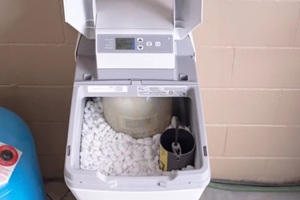
The resin carries the workload. Iron, sediment, and mineral buildup can coat the resin beads, reducing their ability to exchange hardness even when regeneration appears normal.
Control Valve and Programming
Settings drift, households change, and water usage patterns evolve. A system programmed years ago may still run, yet waste water and salt or regenerate too often.
Yearly service focuses on verifying that all three areas still work together as intended.
The One Test That Tells You the Most About Performance
An annual hardness test offers the clearest snapshot of how a water softener is performing. Softened water should typically test under 1 grain per gallon of hardness. Testing confirms whether the system actually delivers softened water or just appears to run normally.
There are two common ways that hardness breakthrough happens:
- The unit regenerates on schedule, yet softened water still tests hard, often pointing to resin fouling or incorrect settings.
- Salt levels remain high while water quality worsens, signaling brine-delivery problems such as salt bridging or poor brine draw.
When performance drops, efficiency drops with it. Systems stuck on fixed regeneration schedules often use more salt and water than demand-based settings that respond to actual household usage.
A yearly cleanout resets the brine tank before either problem snowballs into noticeable water issues.
What Yearly Cleaning and Sanitizing Actually Involves
Yearly maintenance doesn’t mean tearing apart the entire system; instead, it focuses on restoring baseline conditions inside the softener.
Brine tank service usually involves bypassing the unit, removing old salt, wiping out residue, checking the brine float, and restarting with the correct water level and a sensible salt height. Keeping the tank around half full helps reduce bridging.
Sanitizing the system matters even more for homes with well water, as seasonal changes, heavy rainfall, or plumbing work can introduce bacteria.
A controlled sanitizing cycle helps manage any biofilm buildup inside the resin tank and control valve. Cleaning internal surfaces helps better support steady operation and protect long-term performance.
Reliable Water Softener Performance Starts With Expert Care
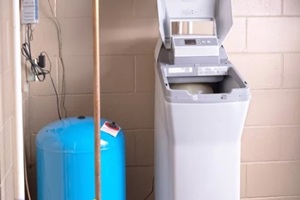
A yearly check helps a water softener stay efficient and reliable, especially on well water, where mineral levels and conditions change over time. Small issues inside the system often go unnoticed until water quality, salt use, or plumbing performance starts to suffer.
At Tri-County Pump Service, Inc., our family-owned team has supported local homes and businesses since 1991 with trusted well systems, water treatment, septic, and plumbing services. We take a whole-home approach, reviewing how your water softener works alongside your well and septic system, and explaining what we see so you can make informed decisions.
Schedule your yearly water softener service to help prevent issues before they start. You can book your appointment online, give us a call at (301) 882-2698, or use our online contact form to get started.