Nov 16, 2026 · 4 min read· Summarize in ChatGPT
Cold weather can catch homeowners off guard when they rely on private wells. You turn on a faucet one morning, and nothing happens. Fortunately, the well deep underground usually isn’t the first area at risk. Modern systems commonly use a pitless adapter to keep the water connection below frost depth, while exposed plumbing and equipment remain more vulnerable to freezing temperatures.
Before winter fully sets in, take a closer look at the equipment around your well. A properly installed well house heater, effective insulation, and a weather-tight enclosure can help reduce freeze problems, while older well pits call for a different set of precautions.
| In This Article: Find out which small well component may freeze before larger pipes, what belongs on your pre-winter checklist, and why a well pit should always be approached differently than a well house. |
Why the Pressure Switch May Freeze First
The pressure switch tells your well pump when system pressure has fallen enough to turn on and when it has risen enough to stop. A small, water-filled connection lets the switch sense those pressure changes.
Size makes that connection particularly vulnerable during freezing weather. Smaller pipes freeze before larger ones, and 1/4-inch lines leading to pressure switches are especially susceptible.
A frozen connection can keep the pressure switch from operating normally, potentially leaving you without water even when larger lines remain clear. If the switch has frozen, water returning later doesn’t necessarily confirm that every component is working properly. A technician can diagnose the control and determine whether freezing caused damage.
Well House Dos and Don’ts
A well house creates a protected enclosure around equipment, but drafts, damp insulation, and poorly chosen heat sources can weaken that protection.
| Do | Don’t |
|---|---|
| Seal obvious gaps around doors and pipe penetrations | Leave damaged weatherstripping or large drafts through winter |
| Keep insulation dry and complete around vulnerable equipment | Count on wet fiberglass to provide the same insulation as dry material |
| Pay particular attention to the pressure switch and its small connection | Protect larger pipes while leaving smaller components exposed |
| Have an appropriate thermostat-controlled well house heater professionally installed | Rely on an unguarded heat lamp or improvised heater near combustible materials |
Moisture deserves attention because wet fiberglass loses some of its insulating ability. Damp insulation shouldn’t be assumed to offer the same level of freeze protection it provided when dry.
The U.S. Consumer Product Safety Commission (CPSC) advises keeping portable heaters more than three feet away from any combustible materials. For a well enclosure, leave heater selection and electrical installation to a qualified professional who can evaluate the space and existing equipment.
Well Pit Dos and Don’ts
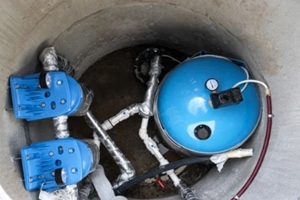
A below-grade well pit raises concerns beyond frozen well pipes. Homeowners should never enter a well pit because gases and vapors can accumulate and create hazardous conditions.
Keep the well pit cover secure and pay attention to drainage around the area without climbing inside. Well pits can be susceptible to flooding, creating a pathway for contaminants to reach the well. The ground around the well should direct rain and snowmelt away so water doesn’t collect nearby.
You may also want to discuss older pit installations during a service visit. U.S. Environmental Protection Agency (EPA) guidance generally favors moving wells out of pits where appropriate, while pitless adapters let the water connection remain below frost depth. Before investing in new equipment, you can have a Tri-County technician assess the property and determine whether the upgrade fits your needs.
Leave Electrical Work and Thawing to a Technician
Electrical wiring, heat-strip installation, pressure-switch repairs, thawing frozen well components, and work inside a well pit aren’t homeowner projects.
Calling a technician also helps pinpoint the source of a no-water problem. A frozen pressure-switch connection, exposed pipe, damaged control, or another system issue can produce similar symptoms. Before replacing parts or making adjustments, the system should be evaluated carefully enough to determine what’s truly responsible for the problem.
Tri-County Pumps offers 24-hour emergency service for sudden water outages and low-pressure problems. Call (301) 882-2698 for help throughout Maryland, Virginia, and West Virginia.
Book Your Pre-Winter Well Service
Now is the time to schedule pre-winter well pump service with Tri-County Pumps. Our family-owned team has served Maryland, Virginia, and West Virginia since 1991, helping homeowners diagnose equipment problems and prepare their systems for cold weather. Call or use our online form to schedule service and Keep It Flowing®.