Jan 5, 2026 · 5 min read· Summarize in ChatGPT

Low water pressure can turn everyday moments into small frustrations, from a slow morning shower to a faucet that barely fills a glass. Many homeowners, especially those with private wells, think they must live with these issues; however, the right solution can restore the strong, steady flow you expect.
If you’ve been searching for answers or researching well pump repair in Manchester, MD, and wondering why your home’s water pressure feels low, a water pressure booster could be the upgrade that changes everything.
What Low Water Pressure Really Means Inside Your Home
Low water pressure often occurs during normal routines. Showers may feel weak and unpredictable. Faucets can struggle to rinse soap. Toilets take too long to refill. Appliances such as dishwashers or washing machines run slower than expected.
These everyday frustrations usually point to a pressure supply that is falling short of what the plumbing system and fixtures need.
Water pressure in a home is expressed in pounds per square inch (psi), which indicates the force of water flowing through the pipes. Most homes perform best in the 45 to 60 psi range. If pressure drops well below that, flow slows throughout the house, and everything starts to feel sluggish.
Homes with private wells tend to experience these symptoms more often since the pump and pressure tank are responsible for delivering water to the property. Some homeowners search for well pump repair in Manchester, MD, thinking the pump is failing, though the issue may relate to pressure that never reaches a strong and steady level.
Static pressure, which is the pressure reading when no water is running, helps reveal the starting point of a home’s system. A gauge on an outdoor spigot can give a quick reading. A low number at rest usually confirms the entire system struggles to push water where it needs to go, especially on upper floors or in larger layouts.
The Everyday Signs That Suggest Pressure Is Too Low Throughout the House
Patterns in water flow reveal a lot. Weak pressure in one sink is usually due to a fixture-specific issue, such as a clogged aerator, but low pressure everywhere indicates a deeper issue.
Household Clues That Pressure Is Falling Short
|
Common Symptom |
What It Tells You |
|
Shower feels soft or fluctuates |
Supply pressure is dropping under normal demand |
|
Faucets produce a slow stream |
Pressure is insufficient to maintain a steady flow |
|
Toilets refill very slowly |
The tank is starved for pressure after each flush |
|
Appliances take a long time to fill |
Incoming pressure cannot keep up with the cycles |
|
Pressure drops instantly when another fixture turns on |
The system cannot maintain flow during simultaneous use |
Families notice these moments most often in the mornings or during other busy times of the day. That sudden change in flow after starting the washing machine or flushing the toilet indicates limited pressure capacity throughout the home. A well pump booster may be the right approach when symptoms appear across the entire system and continue over time.
Why Low Pressure Happens in Private Well and City Water Systems
Several physical realities can weaken water pressure. A long distance between the water supply and the home is prone to pressure loss.
Multi-story layouts reduce pressure as water climbs to upper levels. Pipes with rough interior surfaces or small diameters can limit smooth flow. Older or undersized well pumps may not be built to support increased demand from modern homes with multiple bathrooms or water-intensive appliances running simultaneously.
Reduced pressure often stems from mineral scaling, improperly adjusted valves, or concealed leaks that hinder normal water circulation. These problems accumulate, leaving households with a trickle when they expect a stream. Professionals assess both the supply side and internal plumbing to identify where the pressure is falling off.
Sometimes a repair is needed instead of boosting. In other situations, a booster pump is the long-term fix that provides the home with a stronger, more reliable pressure across the board.
How a Water Pressure Booster Strengthens Flow Throughout the Home
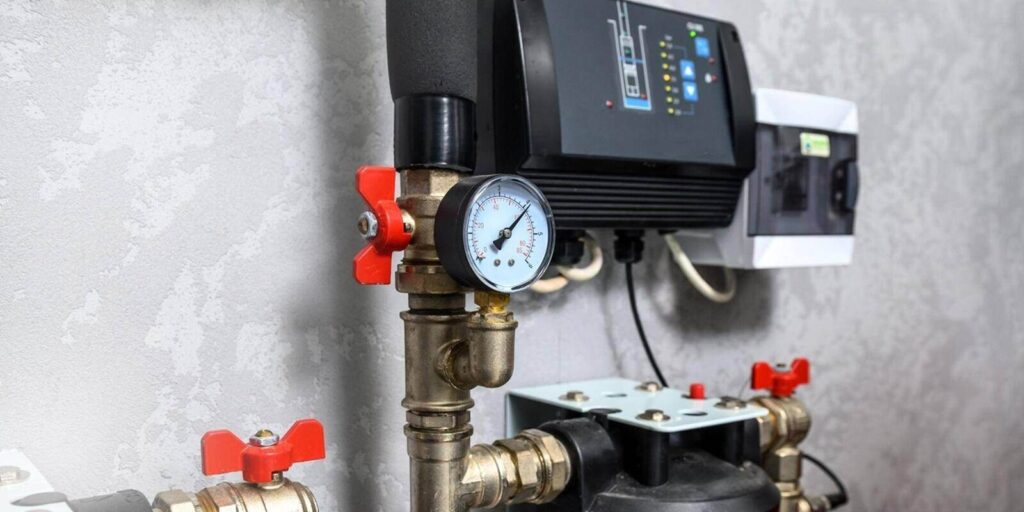
A water pressure booster works in-line with a home’s plumbing to push water at a stronger velocity.
When the system detects low pressure during use, the booster pump turns on and adds force to prevent fixtures from losing performance. This means more consistent water flow during showers, faster faucet output, and improved appliance operation during peak demand.
Why a Booster Often Solves the Entire Pressure Problem
- Increases water speed through the plumbing network so every tap receives better flow
- Maintains steady pressure when multiple fixtures run at once, reducing sudden drops
- Helps dishwashers and washing machines fill properly and clean effectively
- Reduces delays at toilets and other refill-dependent fixtures
A booster system with a well-sized pressure tank creates a more balanced operation. The tank stores pressurized water, smoothing the system’s response and offering steady pressure right when it is needed.
Many homeowners who consider well pump repair in Manchester, MD, discover that adding a booster pump is a more strategic improvement than replacing equipment that still functions but falls short in pressure delivery.
Restoring Your Home’s Water Flow With Expert Support You Can Trust
Low water pressure affects comfort and productivity throughout the day, and the right booster pump system can bring back the strong, steady flow your home depends on. Every property is distinct, so the first step is identifying whether a booster pump or another solution will deliver the best improvement.
Tri-County Pump Service is a family-owned company that has earned long-lasting relationships throughout Maryland, Virginia, and West Virginia. Our team brings more than 30 years of hands-on knowledge in well pump repair in Manchester, MD, well water systems, water treatment, septic services, and plumbing.
If you’re tired of weak flow and slow fixtures, reach out to our friendly experts to schedule a visit or request help. Call today at 301-882-2776, use our online contact form, or easily book service through our website to get your water pressure back on track.