
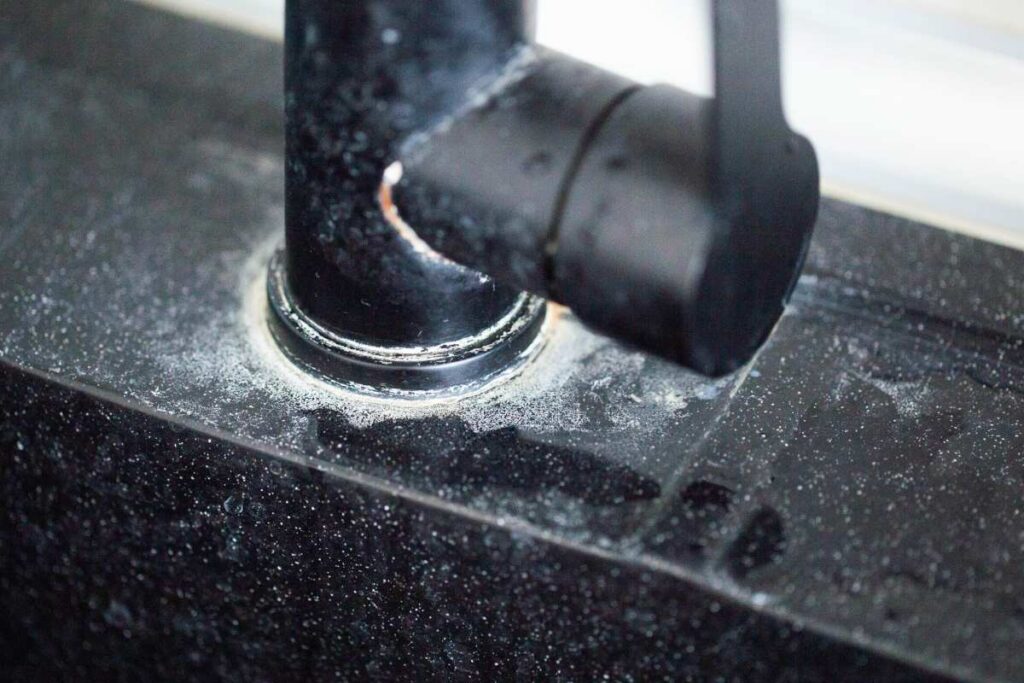
Jun 17, 2026 · 6 min read· Summarize in ChatGPT
| In This Article: Hard water and iron issues can look similar at first, but their clues are different enough to guide you toward a more accurate repair plan. Keep reading on to learn more. |
Orange stains in the toilet, cloudy dishes, and crusty faucet buildup can make well water feel impossible to manage.
Plenty of homeowners hear conflicting advice from neighbors and online forums, especially when one person recommends a softener. At the same time, another insists an iron filter for well water is the real answer. A closer look at your home’s water symptoms usually tells a much clearer story.
The Well Water Identity Crisis: Red Stains vs. White Scale
Many homeowners first notice the problem after unloading the dishwasher and spotting white film across glasses or rusty streaks running down the inside of a coffee mug. Bathroom sinks and tubs often show the same pattern, leaving people scrubbing the same stains week after week.
Confusion starts when every water problem gets labeled as a “hard water issue.” A water softener solves certain mineral problems, though it will not automatically correct iron, sulfur, or manganese concerns.
Private wells behave differently from one property to the next, especially across Maryland, Virginia, and West Virginia.
Proper treatment starts with identifying your water profile:
- White scale usually points toward hard minerals such as calcium and magnesium
- Orange stains in toilet well water often signal dissolved iron
- Dark staining may indicate manganese
- Rotten egg odor commonly points toward sulfur-related issues
The Water Softener: The Mineral Magnet
Hard water symptoms in well water tend to build gradually, which is why many homeowners live with them for years before finally seeking treatment. Water softeners target the mineral buildup responsible for scale, soap scum, and poor washing performance.
What It Does
A water softener works through a process called ionic exhange. Groundwater naturally absorbs calcium and magnesium as it moves through rock and soil, and those minerals create hardness inside the home.
Tiny resin beads inside the unit act like mineral magnets, pulling hardness out of the water. Water leaving the system carries far fewer hardness minerals, helping reduce buildup throughout the plumbing system.
Symptoms It Solves
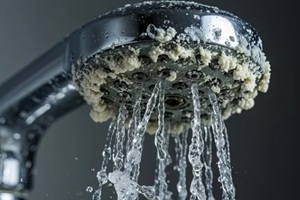
Hard water commonly leaves white scale around faucets, showerheads, and glass shower doors. Soap may struggle to lather fully, leaving skin feeling sticky after bathing.
Laundry problems are also common, with shirts and towels often feeling stiff or appearing dull after repeated wash cycles. Homeowners frequently notice spotting on dishes and cloudy residue on glassware.
Can It Handle Iron?
Small amounts of dissolved clear-water iron may pass through a softener successfully. Higher iron levels can cause problems in the resin bed over time.
Iron buildup can coat the resin, reduce efficiency, increase regeneration cycles, and shorten equipment life. Persistent staining after installation often means the home needs an iron filter along with the softener.
The Iron Filter: The Oxidation Pro
Iron problems are among the most frustrating well-water complaints because the water may look clear at first, but stain everything later. Iron filtration systems focus on removing iron, manganese, and sulfur-related contaminants before they spread through the plumbing system.
What It Does
An iron filter for well water works through oxidation and filtration. Dissolved iron changes into a solid particle during the treatment process, allowing the filter media to trap and remove it before the water reaches sinks, toilets, and appliances.
Many systems also target manganese and hydrogen sulfide gas, which helps reduce dark staining and unpleasant odors.
Symptoms It Solves
Orange and brown staining in tubs, toilets, and sinks usually indicates iron. Metallic-tasting water often signals the same issue.
A sulfur odor is another common complaint in private wells. A rotten-egg odor from your tap often indicates hydrogen sulfide or sulfur-related bacteria somewhere in the water system.
Proper filtration can help remove the metallic taste from well water while reducing odor issues.
Does It Soften Water?

Iron filters do not soften water, meaning that calcium and magnesium remain in the water supply after filtration.
Iron filtration systems focus on removing iron and manganese in well water, as well as sulfur-related contaminants. Scale buildup and soap scum generally require a separate softening system.
The Symptom Checklist: Which One Do You Have?
| Symptom | Likely Culprit | Recommended System |
| White, chalky spots on glassware | Hardness (Calcium) | Water Softener |
| Orange stains that appear after water sits | Clear-Water Iron | Iron Filter |
| Red/Brown particles in the water | Ferric Iron | Iron Filter |
| Dry hair and itchy skin | Hardness | Water Softener |
| Water smells like sulfur/sewage | Hydrogen Sulfide | Iron Filter |
| Low suds when using soap | Hardness | Water Softener |
How To Read Your Water Test: The “Both” Scenario
Many Mid-Atlantic homes encounter water issues that combine mineral hardness with iron, creating staining, buildup, and treatment challenges in the same system. Water testing frequently reveals multiple mineral concerns working together.
When You Need “Both”
Water tests showing hardness above 7 grains and iron above 0.3 PPM usually point toward a dual-treatment setup. Many homeowners comparing a water softener vs. an iron filter eventually learn they need both systems working together.
Water problems are easier to solve when treatment steps are arranged in the right order for the specific contaminants present. Iron filtration typically goes first, so the softener resin stays protected from iron fouling and premature wear.
Understanding Manganese
Manganese often travels alongside iron in private wells. Black or dark brown staining inside toilet tanks, around drains, or near fixtures may indicate manganese contamination.
Manganese bacteria in plumbing lines can sometimes create a dark, slimy residue that appears around fixtures, drains, or water-using appliances. Professional testing helps identify the exact source before treatment equipment is selected.
Why Professional Testing Is Non-Negotiable
Guesswork in buying creates expensive frustration for many homeowners. Big-box treatment systems purchased without proper testing are often undersized, improperly programmed, or matched to the wrong contaminant.
Since 1991, Tri-County Pumps has helped homeowners in Maryland, Virginia, and West Virginia solve pump and water system problems. Our trained technicians evaluate water conditions directly at the property, testing for hardness, iron, and pH during the in-home analysis.
Proper sizing plays a major role in your system’s performance. Larger households with multiple bathrooms, laundry loads, and peak-time water demand require carefully selected equipment.
Tri-County water treatment installation services include plumbing connections, system setup, and programming for today’s high-efficiency equipment.
Clear Water Starts With the Right Choice
Matching the right equipment to the actual water problem saves time, money, and frustration. Water softeners help control scale, soap residue, and hardness minerals, while iron filters target staining, metallic taste, manganese, and sulfur odor.
Tired of the orange stains and the white film? Don’t flip a coin about your water quality; contact Tri-County Pumps today to schedule a free water analysis and learn whether your home needs a softener, an iron filter for well water, or both.