Feb 23, 2026 · 6 min read· Summarize in ChatGPT

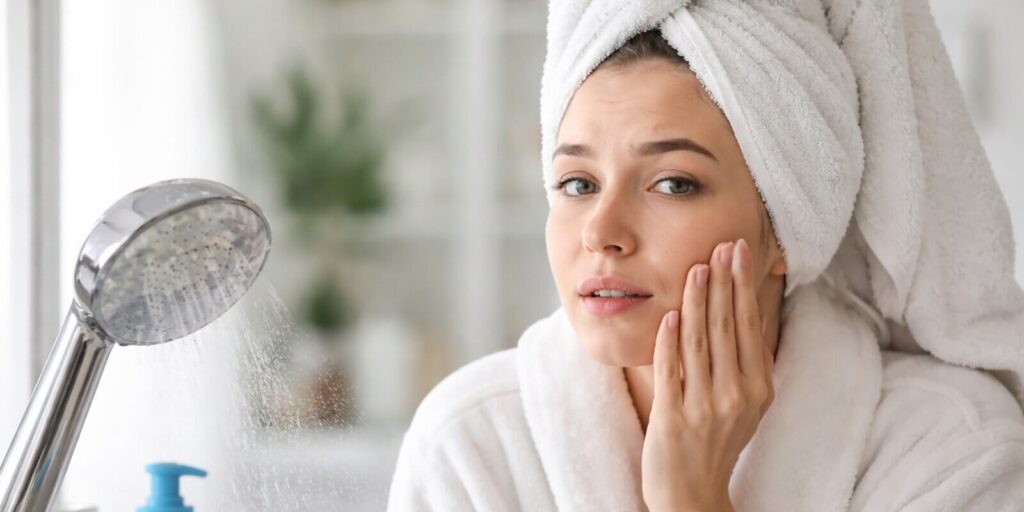
The cold air may not be the only reason your skin feels tight or itchy when you step out of the shower during the winter months.
Lower humidity and indoor heating already make it harder for skin to retain moisture, and the water flowing through your home can quietly worsen the problem. Unfortunately, homeowners who rely on wells with hardwater often overlook its effects on their daily lives.
| In This Article: How hard water can change the way soap behaves on your skin, why winter makes those effects feel stronger, what that means for comfort inside your home, and how water treatment in Maryland can help. |
Why Winter Makes Skin Feel Dry Faster Than Usual After a Shower
Winter conditions strip moisture from skin more quickly, as cold outdoor air holds less humidity and indoor heating lowers moisture levels even further.
Dermatologists at the American Academy of Dermatology explain that this combination makes it harder for the skin to retain water, often leading to tightness, itching, and flaking.
Hot showers tend to feel incredibly comforting in cold weather, yet they can quietly worsen the problem. The Mayo Clinic describes dry skin as water loss from the outer skin layer and points to long, hot showers and harsh cleansers as common contributors.
Heat and scrubbing remove natural oils that normally slow moisture loss. Winter skin problems often have less to do with skipped lotion and more with how quickly the skin barrier is stripped during daily washing.
What Hard Water Really Is (and Why It Shows Up So Often on Wells)
Hard water is simply water containing elevated levels of dissolved calcium and magnesium, a condition especially common in well supplies. These minerals enter water naturally as it moves through mineral-rich soils and limestone formations.
The United States Geological Survey (USGS) notes that groundwater systems frequently monitor hardness for this reason, since mineral levels tend to be higher below the surface than in surface water supplies.
Maryland well owners often see this issue firsthand. Groundwater across parts of Maryland can fall into the moderate-to-hard range, which is enough to change how soap works and leave mineral residue behind.
Hardness itself is not considered a health issue, yet it creates everyday annoyances that homeowners notice quickly.
A Simple Way to Understand Hardness Levels
| Hardness Level | Calcium Carbonate (mg/L) | What Homeowners Often Notice |
| Soft | 0–60 | Soap rinses cleanly |
| Moderately hard | 61–120 | Slight residue, extra soap needed |
| Hard | 121–180 | Film on skin, scale buildup |
| Very hard | 180+ | Heavy residue, frequent scaling |
The Soap and Rinse Problem That Links Hard Water to Dry Skin
The connection between hard water and skin comfort shows up during cleansing because in hard water, soap reacts with calcium instead of rinsing cleanly, forming residue known as soap scum.
The USGS explains that this reaction reduces cleaning efficiency, which leads people to use more product to feel clean.
That extra product matters, as cleansers rely on surfactants to remove dirt and oils. Hard water can interfere with rinsing, leaving more surfactant residue on the skin.
Many people describe a filmy or sticky feeling after washing, even after rinsing longer, and this residue can continue to break down skin oils after the shower ends, making dryness feel immediate.
Winter amplifies this effect: hotter water, longer showers, and frequent handwashing increase exposure to surfactants at the same time humidity is already low. The lingering residue can make skin feel stripped and dry soon after washing.
What Research Shows About Hard Water, Residue, and Skin Irritation
Scientific research helps explain why some people feel these effects more strongly. A controlled study published in the Journal of Investigative Dermatology examined how skin responds when washed with a common surfactant in water of different hardness levels.
Skin washed in hard water showed higher surfactant deposits and increased transepidermal water loss, a measure of how quickly moisture escapes through the skin barrier. Irritation was more pronounced in people with existing barrier sensitivity.
Population studies support this pattern at a broader level; studies in The Lancet have linked exposure to hard water to higher rates of eczema in children.
A later analysis using UK Biobank data observed a similar association in adults. These studies describe correlations rather than direct causes, which keeps expectations realistic while reinforcing that water chemistry can play a role in skin comfort.
Clinical trials also add balance to the discussion. For instance, a randomized trial in PLOS Medicine found that water softeners did not improve eczema outcomes when used as a medical treatment, and that distinction matters.
Softening water is not a cure for skin conditions, yet it can improve how soap behaves and how skin feels after daily washing.
Why Dry Skin Complaints Often Signal a Bigger Water System Story
Hard water affects more than skin; mineral scale forms faster when hard water is heated, which impacts water heaters, fixtures, and appliances. The USGS reports that scale buildup can reduce heating efficiency and shorten equipment life.
Homeowners sometimes focus on dry skin as the first visible sign, yet the same water chemistry can quietly affect plumbing and septic systems.
For properties on private wells, professional testing is the starting point. Frederick County and other local health departments recommend well testing before selecting any treatment system.
Testing determines hardness levels and related water characteristics, providing the data needed for proper system sizing and placement.
Septic considerations also matter, since salt-based softeners discharge directly into household drains. High-efficiency, demand-initiated systems can significantly reduce salt and water use, supporting long-term system performance.
Dry winter skin often sparks the conversation, yet the solution usually starts deeper in the home’s water system.
Understanding what’s flowing through the pipes helps explain what’s happening on the skin and throughout the house, allowing you to pursue options for water treatment in Maryland to help.
A Better Shower Experience Often Starts With Better Water
While winter dryness feels inevitable, water quality may be contributing to the issue more than expected. Hard water can affect how soap rinses, how skin feels after bathing, and how well your home’s water systems perform over time.
At Tri-County Pump Service, Inc., we help homeowners understand their water and choose solutions for water treatment in Maryland that fit their home, well, and septic setup. Backed by decades of local experience, we focus on providing straightforward advice and reliable solutions.
To get started, you can schedule service online, call (301) 882-2698, or reach out through our online contact form.